Short Videos and the Limits of Their Guilt
Short videos are wearing down our capacity for “deep thinking”; short videos are poisoning teenagers; short videos are giving people “brain rot”; short videos leave us unable to stay focused; short videos keep us from embracing complex and distant things the way we once could …… The list of charges against short videos could go on without end, as though short videos ought to take most of the blame for the cultural decay and shallowness of our age. This has even become a consensus among the cultural elites who don’t scroll through short videos (or can’t be bothered to).
Some time ago I wrote an essay called “In Defense of Common Life.” Short videos are, without any doubt, one of the core components of popular life today. It is equally beyond doubt that short videos really are “guilty” of something. But the hostility toward short videos now in the air has reached the point where people say things like: “Modern people, poisoned so deeply by short videos, can only handle things that are clear and spelled out for them.” This hostility often shows up in a totalizing form as well, aimed indiscriminately at electronic screens, at social media, and indeed at every modern technology thought to be diminishing the richness of our subjectivity, and short videos just happen to occupy the most conspicuous spot on this enormous target. In a judgment like the one I just quoted, short videos and modern people are both rejected wholesale. What makes me uneasy here is this: are short videos carrying more guilt than they should, to the point of becoming a scapegoat for some debt that is not theirs? Are we too eager to establish a causal link between the spread of short videos and the changes in our own structure of attention, while overlooking a set of realities that are more complex and many-sided?
In short, I don’t accept the argument that short videos generally cause a decline in the capacity for “deep thinking,” or “brain rot,” and I can’t fully agree that the fragmentation of attention brought about by short videos should be regarded as pure loss either. As I see it, the most popular versions of these views contain two confusions of the can’t-see-the-forest-for-the-trees kind: the first is a confusion of correlation with causation; the second is a confusion of “a decline in the capacity for deep thinking” with “a change in the structure of attention.” I will argue for the limits of short videos’ guilt along these two lines. I should say, though, that since I know absolutely nothing about the natural sciences, I read and made sense of the literature in that area with the help of ChatGPT. Thanks, AI. By the same token, I ask my readers not to treat the scientific material mentioned below as popular science or as scholarly research. Nor, in any sense, should this essay be regarded as an academic paper.
I. Distinguishing Causation from Correlation, with Some Historical Considerations
The first thing to say is that correlation can only describe the synchronic association of phenomena; that is, it can only show that some statistical connection exists between two phenomena, A and B. When one argues for a relationship between short-video addiction and various negative phenomena, one basic limitation of correlational research is that it cannot reveal hidden confounding variables; another is that it cannot rule out the possibility of reverse causation. Of course, evidence of a correlation between short-video addiction and declining attentional control is everywhere, and I hardly need to waste words on it. In other words, the existing literature and scientific research are already enough to show that heavy immersion in short videos is indeed correlated with an overall shift in the structure of our attention, and is also somehow associated with a decline in our capacity for analytical thinking. This scientific consensus in the literature is also the argument most often trotted out by those who insist on the harm of short videos. But if we conclude from this that short videos “cause” these phenomena, we must be very, very careful.
It should be pointed out that the great majority of the research on harm consists of cross-sectional studies, which collect and analyze data at a single, specific point in time, and which often rely heavily on the self-reports of the people being studied. Such self-perceptions are not always as reliable as we think, just as we always “feel” that short videos have made our thinking lazy, whereas I am trying to show that this is not so. Moreover, if we actually read this literature, we will find that the researchers themselves explicitly warn in their papers that we should not rashly infer causal relationships from correlational data.[1] There are, of course, studies that try to establish causation. For instance, Nicholas Barton and Michael Smyth used a controlled experiment to try to show that the rapid switching of contexts that happens while scrolling through short videos does impair people’s memory for carrying out planned tasks afterward.[2] But the crucial question is this: does that mean that consuming large amounts of short video over a long period will permanently degrade our ability to handle complex tasks?

On this point there is a sensational word: “brain rot.” It was even chosen by Oxford University Press as its Word of the Year for 2024. I don’t deny the values behind the word or the worry it is meant to convey, but it is by no means a serious scientific diagnosis. “Rot” always suggests some irreversible, permanent damage, and it also summons up our physical, sensory disgust at things that are putrid. Those who insist on the harm of short videos also tend to believe that frequent exposure to quick, cheap stimulation reduces the gray-matter volume of key regions of the prefrontal cortex. But first, as I just said, a correlation found in cross-sectional studies is not causation. Second, this belief ignores the dimension of time. That is, studies like Barton and Smyth’s can only show that the effect is immediate; they cannot prove that it lasts. What is more, even the intervention studies that can establish a causal relationship between short-video addiction and cognitive decline (and the results of such studies are still very limited) have reached some conclusions that run against the intuitions of the harm theorists. For example, experiments by Gary Small and his colleagues have, if anything, demonstrated neural plasticity: the cognitive or behavioral changes brought about by screen time are not permanent at all, but closer to an adaptive state, which can be fully reversed through certain counteracting activities.[3] In other words, the brain is not a static organ that passively suffers damage, but a system that keeps adjusting its functions dynamically in response to experience and the demands of its environment. The brain can be shaped to adapt to the environment of constant distraction that short videos create, but it can also be reshaped again by measures pushing in the opposite direction. This has been borne out by an enormous longitudinal study, the Adolescent Brain Cognitive Development Study (ABCD Study)[4]. And, interestingly, the ABCD data show that using a medium in a problematic way affects the subject far more than whatever problems the medium itself may have. To put it differently, the key issue is the pattern of the relationship between user and technology, not simply the amount of exposure.

Besides, a modern person can perfectly well spend one stretch of time idly scrolling through short videos and then, in another stretch, give the utmost concentration to reading and reflecting on the Iliad or King Lear. To accuse modern people of having lost the capacity to take in the latter because they are hooked on short videos is both to ignore the variability and adaptability of human behavior over time and to improperly extend the accusation from some people to everyone. In The Greek Way, Edith Hamilton praised the Greece of Pericles and the England of Elizabeth. In such ages, “it is only a step from the sublime to the ridiculous.” Great tragedy and great comedy tend to arise together and to share the same audience. The audiences who could be moved to sighs by the sublimity of King Lear and Oedipus the King could equally enjoy Falstaff’s clowning and Aristophanes’ farces. For Hamilton, this is precisely proof of the robustness of their spiritual world: they could hold within themselves at once the two extremes of human experience, utter pain and self-forgetting joy. By this standard, is the subjectivity of us moderns rich or feeble? I suspect no age has had more possibilities than ours does today, and no age has had the ridiculous and the sublime so close together and yet so far apart: a person can think about Heidegger’s ontology in one video and then, scrolling on, be amused by an MBTI joke in the next; and yet the world they encountered one second and the world they encounter the next are, taken in themselves, absolutely incommensurable—or, rather, they possess a kind of temporary commensurability only in the person who is taking them in.
Furthermore, I don’t know how the harm theorists would answer this question: is it people who already need quick, cheap stimulation who consume short videos, or is it scrolling through short videos that makes them more inclined toward quick, cheap content? That is, there may be a problem of confounded variables and confused causation here. Or we might ask instead: what were the people who like to scroll through short videos in their spare time doing back when there were no short videos? I prefer to look at this question from a more pluralistic angle. Take a sleep-deprived office worker after a long day of toil: much of their energy has already been eaten up by an irritating boss and by the work itself, and they simply have no room left for any “deep” thinking. At that point, short videos really are the most readily available form of diversion. Following this line of thought, if we want to make short videos into a problem, a question more worth asking is: does some preexisting (psychological) problem lead to harmful short-video consumption, or does the latter lead to the former? At least some longitudinal studies have already shown that, for people with depressive symptoms, the causal relationship between the two is more likely to run both ways[5]. And individuals who are naturally worse at controlling their attention are also more inclined to select themselves into stimulus-rich multitasking environments like short-video scrolling. A single, sustained task (reading, say) often requires great effort to suppress distractions, whereas the frequent stimulation short videos provide actually makes such people feel more comfortable.[6]

The attempt to establish an intuitive causal link between the flood of short videos and various forms of cognitive damage, preoccupied as it is with criticizing the weakening of people’s thinking today, has a hard time escaping a presupposition: that there was a golden age (the “pre-short-video” age) in which people could concentrate on everything they did, generally possessed the capacity for contemplation, and were glad to embrace complex and distant things. But in no age have the people capable of such contemplation ever been the numerical majority. One might even say that a society in which everyone was immersed in the kind of deep thinking the decline theorists are looking for would be a frightening thing. Historically, every new medium has tended to arrive accompanied by anxiety. As far back as ancient Greece, Plato, speaking through Socrates in the Phaedrus, launched a fierce attack on the invention of writing: “With the help of letters, they can swallow a great deal of knowledge without a teacher, and seem to know everything, while in fact they know nothing. And not only that—they will be tiresome company, because they think themselves wise when they are not.”[7] Even in a premodern society like ancient China, the literature we know so well today was not available to everyone. A considerable part of it belonged only to the category of literati-official literature, that is, literature created by elites who made their way in the world through learning, and created for elites. Zhu Gang offers an analysis of this in The Chinese Literary Tradition that I kept nodding along to. Briefly, the commoner literature and commoner culture that arose from the “early modern” period on differed completely from literati-official literature in how they came into being and in their aesthetic standards, yet we often mistakenly assume that the latter was the source of the spiritual world and spiritual life of the common people of the time, when the reality may very well have been just the opposite.

In commoner literature, for example, the author often does not exist as an identifiable individual. The vernacular novels, play scripts, and storytelling and ballad texts that circulated among the people depended on a vast, anonymous cluster of authors for their spread. These authors shared the same stock of stories and characters, and so absorbed the same set of values and the same cultural memory. Storytelling, singing, and theater—these forms of commoner literature depended almost entirely on oral performance and commercial operation; the storyteller’s livelihood depended directly on the audience’s patronage, and the content of this literature shifted accordingly. For the people who lived within commoner culture, Sun Wukong, Zhuge Liang, Song Jiang, Xue Rengui and the rest all lived in a single imagined community, rather than being divided up, as we do today, into “the world of Journey to the West” and “the world of Water Margin.” In this way, popular fiction reconstructed nearly the whole of Tang and Song history. Although this popular history differed sharply from the official histories, it gave commoners a narrative framework for understanding the past. One might even say that their view of history, their worldview, and their ethics were shaped precisely by these plays, songs, and stories, which were “quick and cheap” relative to literati-official literature. For example: “For ‘early modern’ commoner society, it was Journey to the West that gathered together so many common sayings and proverbs containing the principles that ‘the common people use every day without knowing it,’ and it supplied an example of how to apply each saying, so that it could almost serve as a textbook for commoner life.”[8] Just as important, Professor Zhu Gang also holds that “for commoner society, their significance was not confined to ‘literature’ in the specialized sense; it was more like what ancient myths were to primitive tribes—very nearly the whole of their spiritual life.”[9] In other words, this commoner literature, passed on by word of mouth, was not some idle pastime of the literati; it was the very life of the commoners. Popular literature has long failed to be treated properly, but that does not mean it never truly governed the lives of the common people of an era. We should also see that this popular literature, which made its way through hybridity, though it later entered literary history thanks to revisions by literati, did not itself endanger the ecological niche of literati-official literature; on the contrary, it is precisely because these literati collected and compiled it (according to their own aesthetic standards) that we have a far more many-sided and richer Chinese literary tradition. If we compare this historical situation with today’s facts, the claim that the popularity of short videos will bring about a double loss of the capacity for “deep thinking,” in both scope and time, seems to me, personally, to be at bottom a pseudo-problem.
II. Disputing “Deep Thinking,” and “Distraction” as a Necessary Training
It is time to clarify what the “depth” of “deep thinking” means. I hold a view of this “depth” that is close to nominalism: if we do not define “depth” at the level of the scope and limits of individual life experience, and instead seek a “depth” in the sense of a ranking of values, then the “depth” we arrive at, if it is not simply untenable, is at least of no use whatsoever in real life situations. In short, the “depth” of thought is in fact a relational property, one that depends on the range of the individual’s experience. When we ask whether an idea or an act of thinking is profound, we cannot avoid a few basic questions: first, who is doing the thinking? Second, against what background of experience are they thinking? Third, what consequences does this thinking have for them? In this sense, so-called “deep thinking” is nothing more than thinking that breaks through the current limits of the thinking subject’s experience. Suppose someone who has been stuck in family conflicts for years happens to scroll past a short video about nonviolent communication, and is woken up by some line in it that everyone already knows, and then begins to reflect on their own patterns of behavior over the years—the “depth” of that reflection for their practical life is beyond question. There is no such thing as “deep thinking” in an essential sense; it is only an “event” that takes place in individual experience, not a property that inheres a priori in some object.
I am not saying, however, that there are no qualitative differences between different kinds of thinking. In other words, I have no intention of flattening the difference between watching the TV series Drawing Sword and reading War and Peace, much less of claiming that the two are equal in value. Quite the contrary: I think there is a fundamental incommensurability between Kant’s philosophy and short-video culture. An example may help me explain this. We can think of different objects of thought (Kant and short videos, for instance) as tools of very different specifications and purposes. The Kant power drill is powerful and more complex in structure than a screwdriver, but there is no doubt that it is also harder to use. It is designed to solve foundational and structural problems; if you are a renovator or an architect, a power drill is more or less indispensable. The short-video screwdriver, of course, is light, easy to use, and has a lower threshold for use, but no one would think the screwdriver and the power drill are the same thing, and still less would anyone think one could replace the other. Who would think a power drill is “nobler” than a screwdriver? If we deny that, why must we think that thinking about Kant is preferable to scrolling through short videos? The difference between Kant and short videos lies in their functions and in how well each fits the concrete task of the thinker’s “life experience as a whole.” The value of any tool can be realized only in its use. Wittgenstein, for that matter, saw the source of linguistic meaning in just this way. So the crux is not whether we have generally lost the ability to think about Kant, but whether we have a sufficiently rich range of possible choices, and whether, within that diversity, everyone is allowed to choose the tool that best fits their own task. Contempt for short videos is, to some extent, an attempt to force everyone’s diverse needs into a single solution, and a denial of the legitimacy of the thinker’s own life.
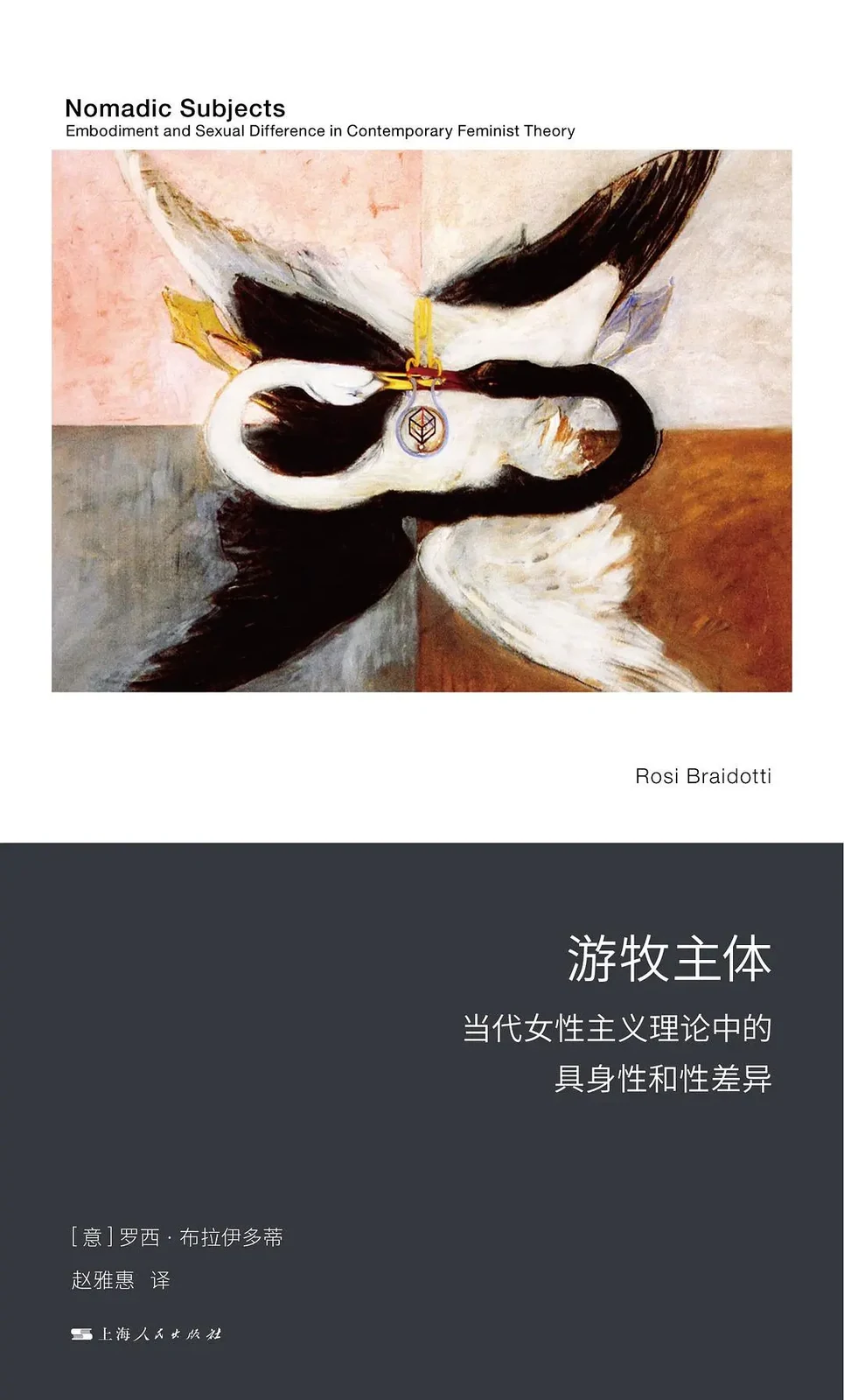
We need to recognize that dismissive views of this kind can never escape their own politics of location; or, to put it another way, all knowledge is always already situated knowledge, and must take the politics of location (in Rosi Braidotti’s sense) into itself. Location is the starting point of thought and action, and it requires the thinker to take responsibility for their own location. In this sense, I understand the anxiety of a literature professor who cries out about the death of literary reading and the degeneration of the capacity for deep thought; but I also think such people have a hard time shaking off the suspicion that they are attacking short videos in order to justify the legitimacy of their own line of work. This kind of criticism is less about improving the way short videos circulate than about trying to prove that literature still has an irreplaceable, high-end value in our time. The competitive and exclusionary orientation of this way of defending literature, however, is something I cannot go along with on any account. The capacity to appreciate serious literature is not some higher faculty of mind that needs rescuing, and short videos should not take an excessive share of the blame in debates of this kind. If there really is something here that needs defending, it should be diversity and the space of possibility, not some higher faculty. Being aware of the politics of location is not meant to keep us dug into our respective trenches, firing at one another; it is meant to help us look for ways to carry on a conversation across different locations. We should look for a way out on the constructive side, not the destructive one.
Short videos are undoubtedly having some kind of collective effect on our present age, and we cannot deny that this effect exists simply because current empirical scientific research has not yet shown it to be long-term and lasting. The main risk the scientific community has identified so far is not a universal harm done by the technology itself to everyone (and it is precisely this that many humanities scholars accept without a second thought), but rather that some users (usually groups who already have certain “problems”) do develop a pathological relationship with the technology when they come into frequent contact with it. That is to say, the effect short videos have on us does not necessarily manifest itself directly as a disease; it is closer to what Raymond Williams called “social experience in solution”—a collective feeling not yet articulated, not yet fixed, and yet shared by all of us. The reality of this feeling cannot be denied. But my opposition to the claim that short videos generally weaken people’s capacity to think does not mean I deny that short videos are changing our collective structure of attention. We really have acquired a preference for briefer, more intense stimulation. One point of consensus is that the very design of short-video platforms exploits powerful neurobiological reward mechanisms, and that these mechanisms naturally promote a fragmented pattern of attention driven by external stimuli. How the dopamine system reinforces behaviors that lead to reward is a thoroughly verified causal mechanism, and short-video platforms are precisely a way of getting users to keep swiping in order to obtain content that might bring them great pleasure—which is in itself a powerful form of behavioral reinforcement. Even so, this shift in the structure of attention still needs to be looked at historically.

As early as Walter Benjamin’s time, he was already lamenting the disappearance of the “aura” (Aura). But outside the academy there is a widespread misunderstanding in how “aura” is used, namely, taking it to be some mysterious property inherent in an object. We need to be clear: aura in Benjamin’s sense is a historical category, not an ontological one. The reason he could not get over the disappearance of the aura, apart from his aesthetic sensibilities and preferences, was more that he wanted to find out what changes modern technology had brought to the structure of perception in his era. Briefly, the aura disappeared because technical reproduction changed the whole structure of perception through which people are situated in the world, and this in turn further hastened the aura’s demise. For Benjamin, premodern experience was a continuous, accumulated, sedimented “Erfahrung” (usually translated as “experience”), whereas modern urban life destroyed this artisanal mode of perception and replaced it with a mode of “lived experience,” that is, Erlebnis. Erfahrung corresponds to the story with a long lineage, passed from person to person; Erlebnis corresponds to the shocking event, which arrives from far off, out of a rapidly changing anonymous world, and strikes the subject a powerful blow. Shock-experience needs no tradition, nor the organic quality of Erfahrung. This shift in the mode of perception has continued down to the present, and finds its most extreme expression in the popularity of short-video platforms.
The craze for short videos has indeed greatly enlarged the place of what Benjamin called “Erlebnis” in our overall structure of perception. The literature on this, from science to philosophy, is vast, and recapitulating it is not the task of this essay. On the one hand, as I argued above, quick, cheap content of this kind has existed from ancient times to the present, and has always been the mainstream of mass consumption; moreover, “short” does not mean “shallow,” and the scope of “deep” has to be defined in terms of individual life experience and its effects. On the other hand, what I want to say is that even Benjamin still held to a historical dialectic and sought to affirm the liberating potential of such technologies. New technology did destroy continuous experience, which was nothing short of a disaster, but it was precisely this destruction that created the conditions for a new kind of artistic and historical consciousness, one oriented toward the masses and carrying the potential for political liberation. Indeed, Benjamin was himself the embodiment of what he called the “destructive character”: “He reduces what exists to rubble, not for the sake of the rubble, but for that of the way leading through it.”[10] This is exactly how he treated the then-emerging medium of film: “It makes the public an examiner—though an absent-minded one.”[11] The “absent-mindedness” here is crucial: it is a necessary training for adapting to modern life, not simply a defect. Benjamin also says, in the same vein:
“The person who is being entertained can likewise form habits. More than that, the ability to master certain tasks in a state of distraction proves that their solution has become a matter of habit. [……] Distraction is becoming more and more noticeable in all fields of art and has become a symptom of profound changes in apperception; reception in this state has found in film its true means of exercise.”[12]
What this means is that the modern masses are no longer isolated contemplatives; they take in art—and other content as well—collectively, in a state of “diversion” or “distraction” (Zerstreuung). “Diversion” here is a synonym for “distraction” and the opposite of “concentration.” Distraction is not a purely negative state; it is precisely the basic condition of modern urban life. More importantly, even in a state of distraction people can still carry out complex tasks and form new habits in the process. Architecture is an example: it is precisely in a distracted way that we come to really know a building—we do not learn to live in a building by contemplating it with concentration, but by using it day to day and glancing at it carelessly, absorbing it into our habits in a tactile, almost unconscious way. For Benjamin’s era, film was the perfect embodiment of this diverted, distracted reception. Today, without the capacity for distraction, or if our structure of attention were not dispersed and plural in the way it now is, we might very well be unable to adapt to a modern life that is now governed by technology and speed. In other words, film (or, today, short video) is also a modern training of the public’s structure of perception, and it thereby democratizes artistic and cultural production. These are then no longer objects of contemplation for a small cultural elite, but become sites in which the masses carry out critical training. In this way art is inevitably politicized. In the age of short videos, the rapid cutting and continuous movement of the camera in film have not disappeared, of course, but at the level of everyday perceptual training they have gradually given way to the seamless yet abrupt swiping from one short video to the next. We might even say that culture itself is, as a result, inevitably politicized.

The controversy over Cai Guo-Qiang in the past few days may serve as evidence. Because short videos spread quickly—sometimes too quickly—they have themselves become a new public stage. Political information has become something that comes rushing at us, merging seamlessly into the act of swiping the screen. Online connection may become a new form of collective organization, and there is already a good deal of anthropological research on this to draw on. What is worth considering here is the effect of rapidly spreading “bias” on political attitudes. Or, to put it another way: do recommendation algorithms polarize us? It looks as though algorithms, tailored to each individual, create a universe of information full of bias, one that further deepens our biases. But without such a universe of information, would the views a person encounters be more varied, or more uniform? In actual research, whether information cocoons exist seems to be more a question of research or measurement methods than a reality that holds across the board. That is, if one analyzes the structure of social networks with the methods of computational social science, one can arrive at conclusions supporting the existence of information cocoons; whereas through questionnaires and the like, one finds that social-media users encounter far more varied views than non-users.[13] On one popular view, short-video platforms are full of distorted, low-quality content, and the flood of such distorted content further aggravates polarization and division in the real world. But we can find counterexamples. Researchers who altered the recommendation algorithms of 9,000 YouTube users found that although manipulating the algorithm did change what users consumed, in the short term it produced no visible polarizing effect on their political attitudes.[14] In other words, our political attitudes and our capacity for political participation are not determined by what short videos push at us. And one could say that in every age, the search for bias always wins out over the urge to pursue the facts of the matter. For the latter means understanding many different positions, and it also means a harder, longer forensic investigation. Without any doubt, the capacity to contemplate and the capacity to seek the truth are both capacities that have to be trained, not gifts we are born with.
III. Concluding Remarks
All in all, I am by no means defending short videos across the board, much less singing the praises of their triumph. I have to admit that I myself get almost no pleasure out of “scrolling through short videos,” and I am not in the habit of using Douyin or Kuaishou. My starting point is that we need to set reasonable limits on the “guilt” of short videos, rather than simply treating them as an interchangeable scapegoat—many cultural products have occupied that position: in the past it was computer games, and in the future it may be AI. Nor do I accept the unverified biological determinism of “brain rot,” or the practice of conflating real causation with statistical correlation. People who support the latter often attack, in the name of deep thinking, a popular culture that has always been present in history and full of vitality, while their own thinking goes not very deep at all, and even sinks into a nostalgic elitist pose in which they cast themselves as clear-eyed critics and healers. In recent years, at the opening and graduation ceremonies of universities everywhere, quite a few humanities professors have shown, in their speeches, an undiscriminating hostility toward this popular culture. This has even made me wonder whether the cultural elites who take this line are just mechanically applying historical texts to contemporary reality without thinking, or whether they have really thought it through seriously and sincerely believe that we are in such a crisis. As I see it, the deep thinking they are calling for is not a capacity we have lost as a whole, across the board, because depth in the evaluative sense has never been possessed by us as a whole, and depth in the pragmatic sense (as I described it above) has not yet been accepted by us as a consensus.
I grant that the popularity of short videos has aggravated the fractured state of our attention; it really has made us no longer like people a thousand years ago, who might spend their whole day focused on just one or two things. But this is not simply a loss. This change must be understood as an ongoing training that arises in order to adapt to modern life, and one that can still produce new political potentials and aesthetic forms. If there really is something here that needs defending, it is certainly not the capacity, in the literary and philosophical sense, to contemplate texts of the past, but rather sensitivity to the “situation,” and, more importantly, the capacity to grasp the whole. I discussed this wholeness at some length in “In Defense of Common Life.” The proper response to the real anxiety behind the alarm over short videos is not to oppose short videos, but to protect the diversity and possibility of our lives. This means a capacity to switch flexibly among many fields of possibility, a capacity that lets a person, even when confined to a state of toil, remain aware that a larger whole exists, and even, through this, attain “leisure” in the classical sense.[15] This might be seen as a kind of improvement project directed at the structure of our own minds and temperaments, the aim of which is to develop a nomadic capacity to move freely between the sublime and the everyday, between concentration and distraction, between critique and empathy, and, in this never-ending process of openness, to stay always sensitive to the politics of location, so as to bring about a more reliable community. But I also admit that without a collective effort, a plan to improve the structure of our minds and temperaments like this is basically a fantasy.
Recent events bear this out as well—as Typhoon Ragasa bore down, people everywhere sighed that they were finally getting to live, for a little while, a life with a bit of breathing room, even though the price was cruel and heavy. Seeing this, I am all the more convinced of one fact: the crux of our era’s problems does not lie with short videos.
Four Xiaohongshu posts about Typhoon Ragasa:




Notes
[1] Sarner, Moya. “All in the Mind? The Surprising Truth about Brain Rot.” The Guardian, 29 Jan. 2025, www.theguardian.com/lifeandstyle/2025/jan/29/all-in-the-mind-the-surprising-truth-about-brain-rot.
[2] Barton, N., and M. Smyth. “Context-Switching in Short-Form Videos: What Is the Impact on Prospective Memory?” Memory, 24 June 2025, pp. 1-14, doi:10.1080/09658211.2025.2521076.
[3] Brennan, Dan. “What Is Brain Rot?” WebMD, 20 Oct. 2024, www.webmd.com/brain/brain-rot.
[4] Nagata, Jason M., et al. “What We Know about Screen Time and Social Media in Early Adolescence: A Review of Findings from the Adolescent Brain Cognitive Development Study.” Current Opinion in Pediatrics, vol. 37, no. 4, 1 Aug. 2025, pp. 357-64, doi:10.1097/MOP.0000000000001462.
[5] Hartanto, Andree, et al. “Does Social Media Use Increase Depressive Symptoms? A Reverse Causation Perspective.” Frontiers in Psychiatry, vol. 12, 2021, doi:10.3389/fpsyt.2021.641934.
[6] Hasan, Md Kamal. “Digital Multitasking and Hyperactivity: Unveiling the Hidden Costs to Brain Health.” Annals of Medicine and Surgery, vol. 86, no. 11, 18 Sept. 2024, pp. 6371-73, doi:10.1097/MS9.0000000000002576.
[7] [Ancient Greece] Plato, Plato’s Dialogues on Literature and Art, translated by Zhu Guangqian, People’s Literature Publishing House, 2008, p. 135.
[8] Zhu Gang, The Chinese Literary Tradition, Higher Education Press, 2018, p. 188.
[9] Ibid., p. 46.
[10] Benjamin, Walter. “The Destructive Character.” Reflections: Essays, Aphorisms, Autobiographical Writings, edited by Peter Demetz, Schocken Books, 1978, pp. 301-03.
[11] This is the last sentence of the main text of “The Work of Art in the Age of Mechanical Reproduction,” but the Chinese translation is not very clear. On p. 241 of the English translation, the sentence reads: “The public is an examiner, but an absent-minded one.” See Walter Benjamin, Illuminations: Essays and Reflections, translated by Harry Zohn, edited and with an introduction by Hannah Arendt, Schocken Books, 1968, p. 241.
[12] [Germany] Walter Benjamin, Illuminations: Selected Writings of Walter Benjamin, translated by Zhang Xudong and Wang Ban, SDX Joint Publishing Company, 2014, p. 262.
[13] Hartmann, David, et al. “A Systematic Review of Echo Chamber Research: Comparative Analysis of Conceptualizations, Operationalizations, and Varying Outcomes.” Journal of Computational Social Science, vol. 8, no. 2, 2025, p. 52, doi:10.1007/s42001-024-00287-7.
[14] Liu, N., et al. “Short-Term Exposure to Filter-Bubble Recommendation Systems Has Limited Polarization Effects: Naturalistic Experiments on YouTube.” Proceedings of the National Academy of Sciences of the United States of America, vol. 122, no. 8, 2025, doi:10.1073/pnas.2318127122.
[15] See https://mp.weixin.qq.com/s/BU-qYrPt8K25aNuj1NfYrg