Redefining "Us"Apple in the Cook Era
On August 31, 2026, Tim Cook stepped down as CEO of Apple. He ran the company for fifteen years, longer than Jobs himself did. How should we assess Apple under Cook? The obvious frame of comparison still seems to be the Jobs era. One natural and fairly representative answer goes like this: "Cook's fifteen years were Apple's best commercial era, and its worst era for innovation."① However we list Cook's merits and failings, or the products that succeeded and failed, what we are really trying to answer is still this: when it comes to "innovation," or "changing the world," did Cook do better or worse? Then we go looking for evidence to justify a verdict that was intuitive to begin with.
What I am curious about is this: what is the most basic difference between Apple under Cook and Apple under Jobs? Stephen Holstrom, a character in the animated series Pantheon, is modeled on Jobs, but he magnifies the more dangerous sides of him: the paranoia, the need for control, the aggression.

Screenshot from Pantheon, image source: Sol 2070
Jobs was not unaware of this about himself, and that is probably why he picked Cook as his successor rather than Scott Forstall, the man people called the "mini-Jobs." What made Jobs fascinating was that nearly every product launch was a wager of the successes already in hand against a future not yet proven. It felt almost like a deliberate embrace of self-destruction. A venture that is bound up from within with the possibility of ruin and failure naturally has a higher intensity for people, and so it is more compelling. This kept Apple permanently in a state of creation — and creation is transformation, which is to say an unstable state, as if the company were itself a work that might fail at any moment. Jobs was without question a genius of product intuition, but he also believed that Cook was not someone who really understood products.
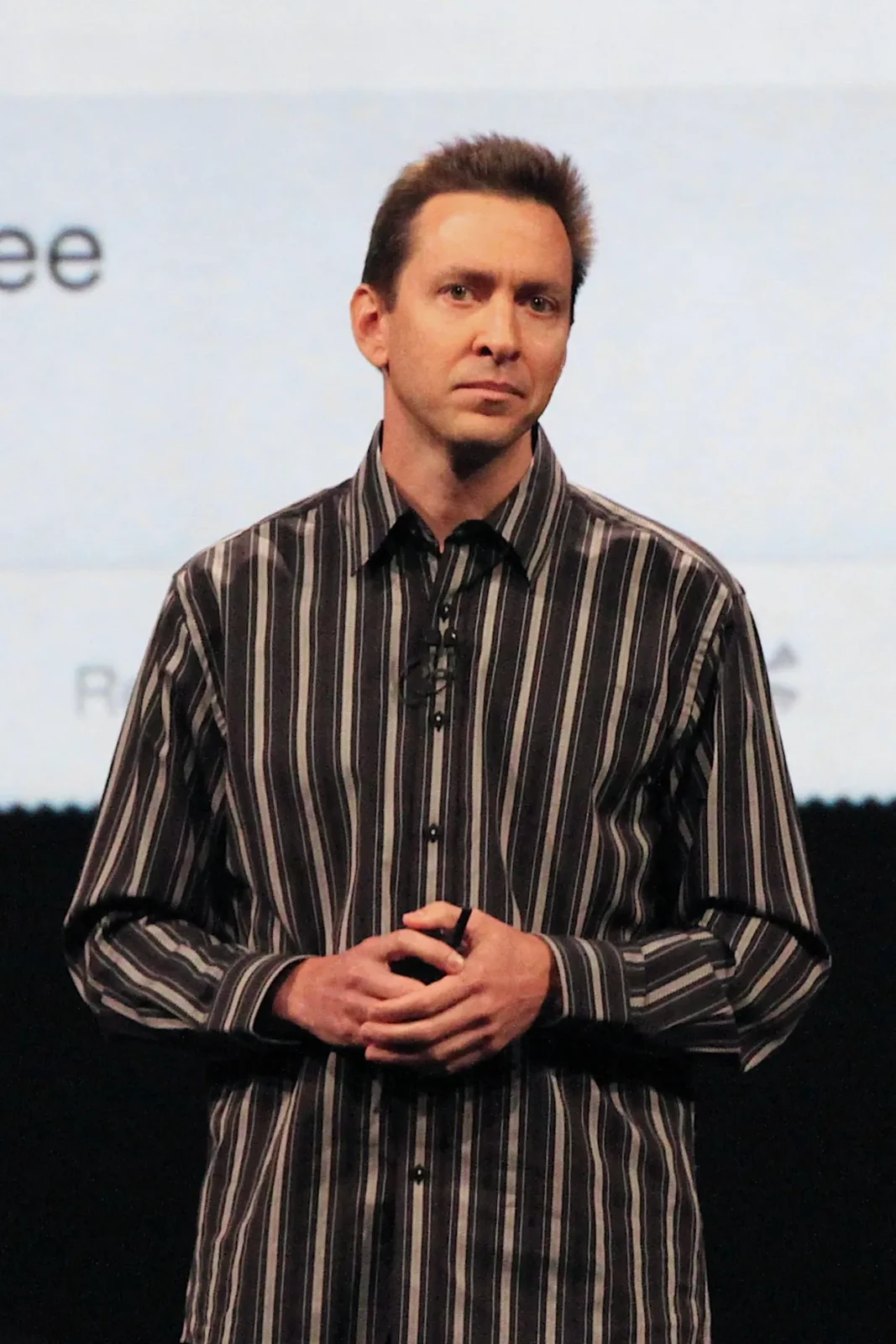
WWDC 2012, June 11, 2012, photo by Matt Yohe (CC BY-SA 3.0)
Why, even so, did he choose Cook as his successor? I think that if we stop taking "choosing a successor" to mean "choosing someone like yourself," the question is actually easy to answer. Jobs probably knew perfectly well that the Apple he would leave behind was a precise but fragile machine, and that the source of its fragility was not a shortage of creative geniuses — Apple had plenty of geniuses like Jony Ive, whose relationship with Forstall was so bad that the two would avoid being in the same meeting room unless Cook was present② — but rather that, without a mediator, the room these geniuses had for working together would become narrower than ever. Cook has an unusually strong quality of "selflessness"③, which suited him exactly to that position. Jobs's love for Apple was not narcissistic; he did not try to make Apple run his way forever. So the task of choosing a successor was this: once he was gone, what would the company need in order to keep running in good shape? By then Jobs had already mapped out Apple's product line for the next several years (the iPhone 5, the iPad Mini, and so on), so how were those to be made real? In every sense, Cook really was a more rational choice than Ive or Forstall.
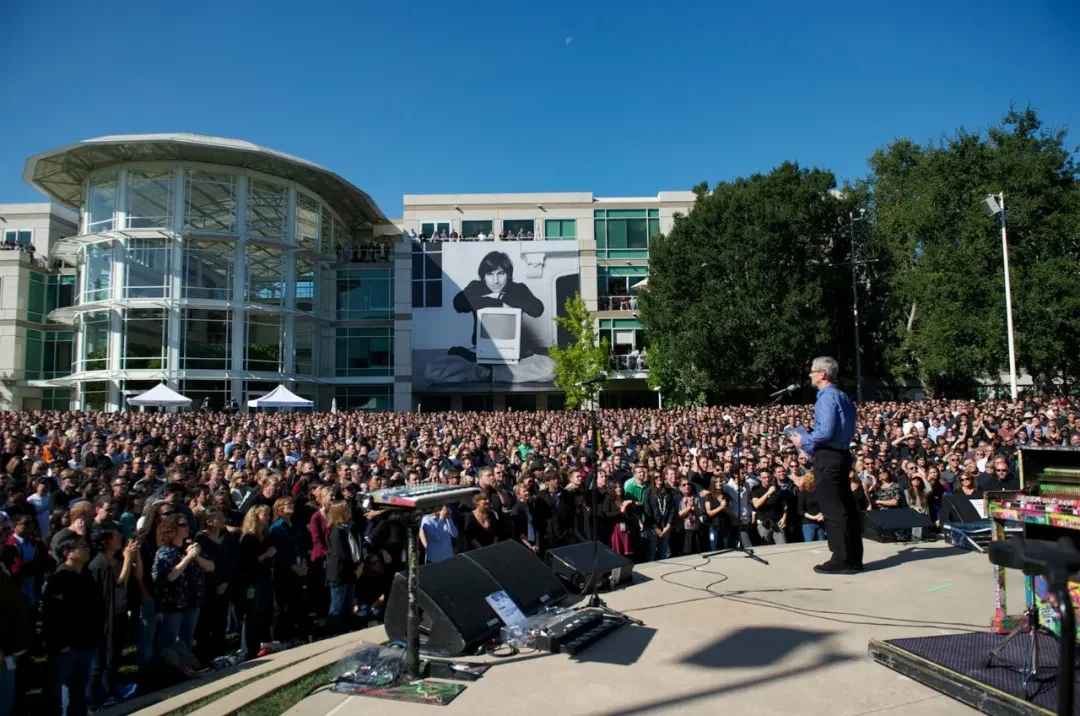
October 19, 2011, image source: Apple
We all know what happened next. Apple went from the Jobs-era embrace of uncertainty to being a company that manages certainty with extreme precision. There was never again a moment like Jobs in 2007 "reinventing the phone," and Cook never said anything of the sort. Even its boldest attempt, Project Titan, ended in failure after ten years and more than ten billion dollars. And the reason for that failure cannot be separated from Cook's inability to make the kind of irreversible decisions Jobs made. Not to mention Apple's slow response to the age of AI. A lot of commentary tries to support claims about Cook's successes and failures with products by going through the record product by product. But can the success of a tech company, or the success of a CEO, really be measured simply by counting breakthrough moments?
"Technology changes lives" is an all too common picture, as though the mission of a company as great as Apple were to create entirely new product categories that change everyone's lives. Jobs changed the relationship between us humans and technology. Whether or not you know who Jobs was, this has already made its way into your life in all sorts of ways. But the "humans" here are people with standard sight and hearing, standard physical and cognitive abilities — and preferably people who can afford Apple's prices. Where does this "standard" come from?
Back in 1984, when he unveiled the Macintosh, Jobs said something else: "technology for the rest of us."④ For Jobs, "the rest of us" meant ordinary people who were not engineers. Technology should not belong only to those who can understand it; it should also belong to those who simply want to use it. So over the next twenty years, the graphical interfaces and interaction paradigms that Apple's design philosophy addressed were all aimed at solving one problem: how to let people who are not engineers use the most advanced technology with ease.
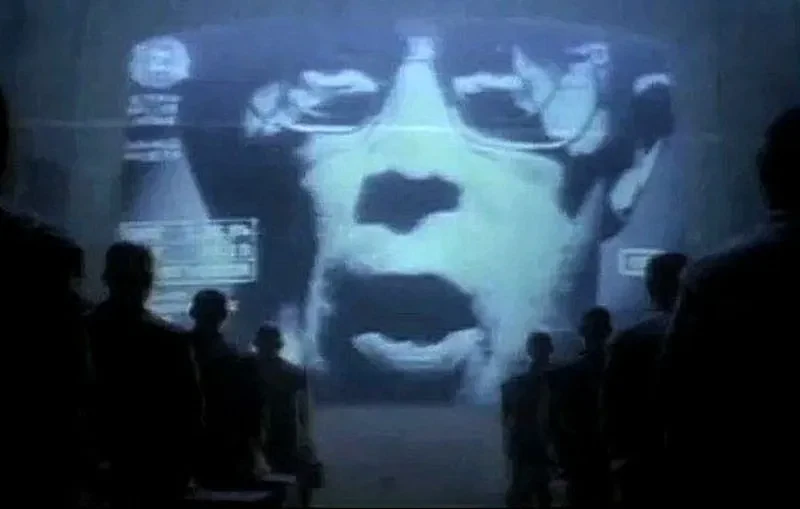
1984, image source: Computer History Museum
But think about the product that the Apple moment of 2007 brought us: a smooth sheet of glass. How is a blind person supposed to use that? In the age of keypads, they could at least find buttons by touch and operate a phone that way, whereas the iPhone, in "reinventing the phone," in principle shut blind people out of that revolution entirely. Apple realized this — if it did not solve the problem, then the iPhone, as an innovation that changed the world, would at the same time be deepening the world's inequality. In 2009, the iPhone 3GS shipped with a gesture-based version of VoiceOver built in. It was the first gesture-based touchscreen reader in human history, letting blind people operate a smooth glass screen through a specific set of touches and swipes. That same year, the National Federation of the Blind (NFB) in the United States gave Apple an award, stating that "Apple has done more for accessibility than any other company to date."⑤ The following year it gave Apple the Dr. Jacob Bolotin Award, noting in particular that Apple had done something we would ordinarily have thought impossible: it let blind people use a smooth glass screen without having to buy any additional assistive software. That second part is crucial, because until then screen readers were a separate commercial category. In the United States, the JAWS screen reader for Windows cost close to a thousand dollars. Before a blind person could use a computer at all, they first had to pay a sum far beyond what anyone else paid. This was an ethical decision: the right to use digital devices should not be discounted because of the state of one's body. And it was precisely during Cook's fifteen years in charge that accessibility went from being the work of a relatively marginal engineering team to being a core company-wide value.
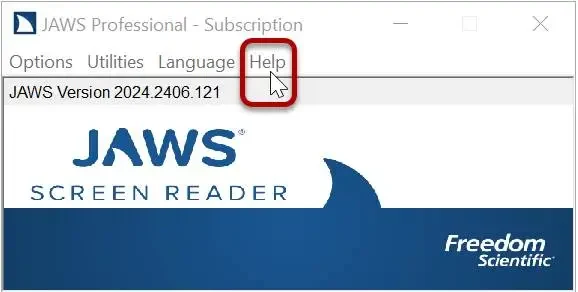
Image source: University of Houston Department of Mathematics, Jennifer Marsala
In a 2026 podcast marking Apple's fiftieth anniversary, the National Federation of the Blind told an even earlier backstory: in the Apple II era, blind users were already working out on their own how to make the computer serve them — reading and writing files with VersaBraille devices, listening to feedback through the Echo speech synthesizer, and so on. As the Federation put it: "This history was written by blind people and our allies, who took a mainstream personal computer and, with the hacker spirit in the most positive sense, bent it into something that fit their needs."⑥ So in 1985, building on this movement from the community, Apple formally established an "Office of Disability," founded by Alan Brightman. A movement that came from inside the community was formally taken into the company's organizational structure.
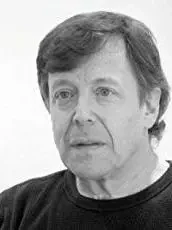
Image source: Web4All 2019 official website
In fact, this already shows a kind of power entirely different from Jobs's sort of genius intuition — work that is institutional, that goes on day after day, that does not depend on inspiration but does require continual presence. It is close to a kind of ongoing care, like dusting the furniture every day — and it is precisely through this daily, never-ending dusting that the furniture becomes something quite different from the merchandise on display in a store, becomes an inseparable part of our lives. So why do we tend to think that the creativity inherent in this daily care is weaker than the novelty produced by a wanderer like Odysseus?
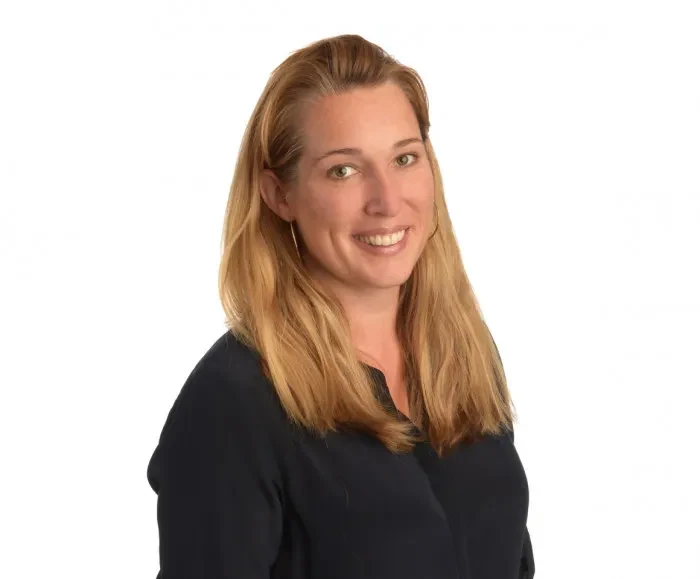
Photo accompanying a 2020 article, image source: DePauw University
Sarah Herrlinger is a good example of this. She graduated from DePauw University in 1994 and early on held positions such as media planner and assistant media director. In September 2003 she joined Apple in product marketing. Three years later, her manager suggested she move to the education division, to take charge of an area in which she had no prior experience whatsoever: special education. So she started visiting schools and kept watching how children with disabilities used technology. She noticed that for children with dyslexia, the very way text was presented on the screen could be an obstacle. It was a loop. She passed the observation on to an Apple engineer, and a few months later, when the new version of the operating system came out, she got a call from the engineer: "Sarah, we built that feature in."⑦ From then on she went back and forth between schools and engineers, over and over, throwing the engineers questions and requests that seemed odd. In 2015 she was promoted to senior director of Global Accessibility Policy and Initiatives. In her own words, her job is this: "I sit at thirty thousand feet and look at everything Apple does — whether it's products, retail stores, content, or services — to make sure that in every part of it we've thought about people with disabilities and are treating them with dignity and respect."⑧
Why does accessible design matter so much? The core of design, as I see it, is this: it is an act of arranging in advance the conditions of the life you are about to live. It decides what is easy and what is hard, what you can see at a glance and what you have to work to find, what feels natural and what strikes you as off. And the power and importance of this advance arrangement lie precisely in its being invisible. A good arrangement makes us feel that this is just how the world is. The aim of design is to configure the default ways we live. A default is a default precisely because it does not need to occupy the foreground of our consciousness all the time. And the designer's predicament is that they have to make a decision about the way of life of someone they do not fully understand, on that person's behalf. Once such a decision is sealed into a product or a system, it goes on operating, silently. So design has, at bottom, an ethical dimension — one that cannot be overstated however you explain it — and it comes from the very structure of "arranging other people's lives for them." And it is in accessibility that this arrangement is thrown into the sharpest relief — how is a "normal person" supposed to arrange the default way of life of a person with a disability?
That is why Sarah has a partner: Dean Hudson. He is a totally blind VoiceOver user and also an engineer on the accessibility team. This ensures that the needs Sarah understands from the education and policy side can be lined up, right away, against Hudson's sense of what is technically feasible.
2020, image source: Apple
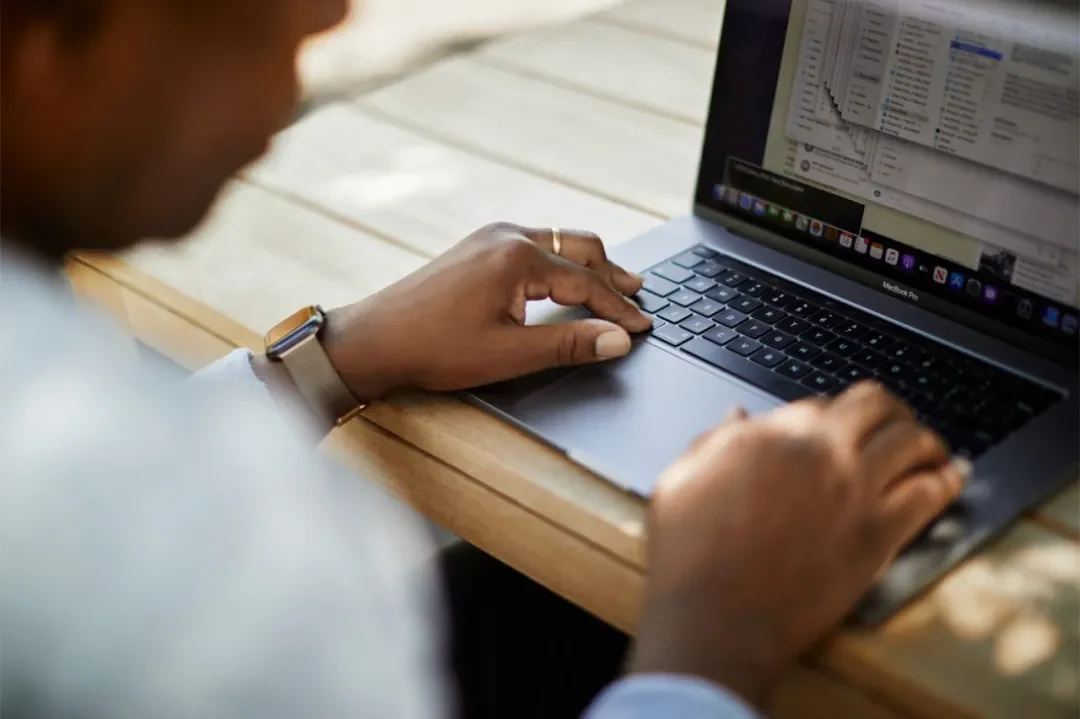
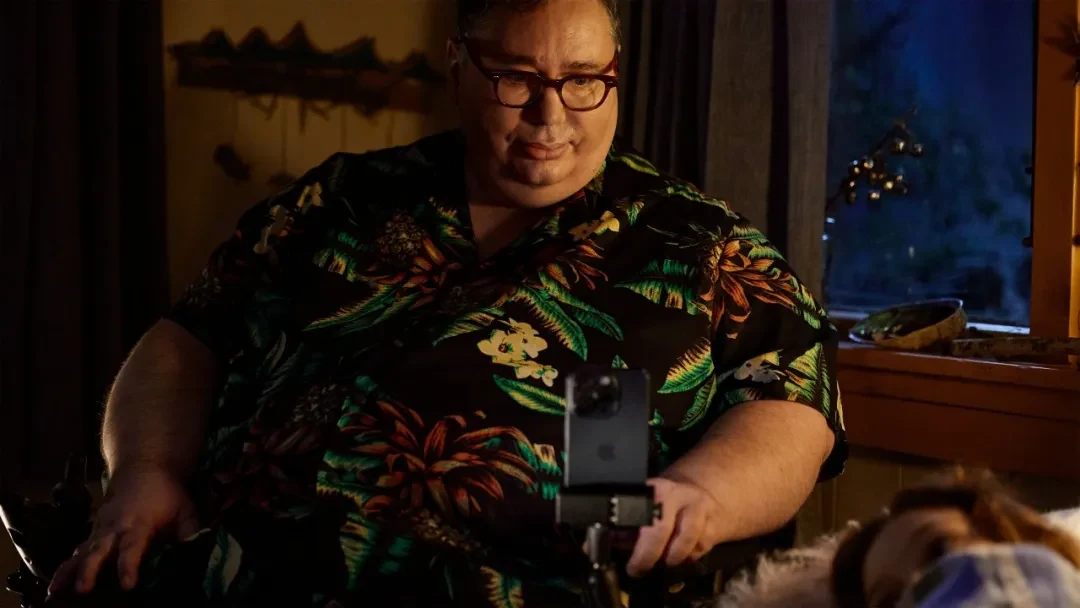
In 2023, Apple introduced a feature called Personal Voice. Its intended users were people with ALS, whose illness gradually takes away their ability to speak. Personal Voice lets the user follow prompts and read aloud about fifteen minutes of text, after which the iPhone trains a network on the device itself and generates a synthetic voice that sounds very much like the user. From then on, even if they lose the ability to speak entirely, they can type and have the device speak in their own voice. Herrlinger has told the story of a man with facioscapulohumeral muscular dystrophy, Tristram Ingham. He said: "The disability community has always been deeply wary of 'proxy voices' that speak for us. Historically, health care providers have spoken for disabled people, and families have spoken for disabled people. If technology can let a person's voice be preserved and sustained, that is autonomy, that is self-determination."⑨ It is, of course, a voice synthesized by an iPhone, but it is said to be as soft and steady as his own speaking voice.
On the set of The Lost Voice, 2023, image source: Apple
If a feature benefits only a very small group, does it deserve the same praise as the moment of "reinventing the phone"? If our moral intuition says no, that basically means we hold something close to a utilitarian view on the question. Because if we measure along the dimension of "what this means for the person using the technology," not only is there no such ranking between the two, but the ontological weight of the second may be far greater than that of the first. For that "person," every improvement and invention aimed at "better" already presupposes some kind of participation — quality is a yardstick that only appears after participation; "participation" is the precondition for "quality" to appear at all. And what if the product's design has itself excluded the right to participate? Improving an experience, however much, is an operation carried out within a life a person already has. But letting someone have a life from which they were previously shut out changes the basic, overall relationship between that person and the world. Accessibility changes whether there is an experience at all, not the texture of the experience.
What is more, as Herrlinger keeps pointing out, accessibility features often radiate back into mainstream users' situations, even though at the moment a feature is first designed nobody can see that coming.⑩ We already have plenty of examples. The forerunner of dark mode was an "inverted, white-on-black" display option designed for low-vision users (you can still find that option in iOS). Music Haptics was originally designed as a way for deaf people to feel music through vibration, and after its release large numbers of hearing users started using it too. Voice Control was originally designed for users with motor disabilities who cannot use their hands, and it later became the standard way of interacting with smart homes. Text-to-speech was originally developed for blind people, and now Siri talks to everyone. Even text messaging was originally designed as a means of communication for deaf people, and now everyone texts. It is precisely because the needs of people with disabilities can be fairly extreme — and extreme needs mean tighter design constraints. A design solution produced under tight constraints is bound to become a more elegant general solution once those constraints are loosened. That is to say, design for the most vulnerable can end up benefiting everyone.
Still, even information about Herrlinger herself is not easy to gather; all we can get are fragments. The attention she receives resembles the fate of the kind of work she does — work that genuinely improves the situation of the world's most vulnerable people rarely makes the headlines of tech news, and nobody talks about it in the envious tone they use for Jobs. Because its beneficiaries are precisely the people least likely to command public attention.
Herrlinger translates the needs she observes and passes them on to the engineers, goes back to the users to confirm the effect, and then raises the next need: a loop that has now gone on for twenty-three years. For Herrlinger, these features are like her "little babies," and when she sends them out into the world she feels proud of them.⑪ What has come of it is by now astonishing. On the vision side: VoiceOver has been iterated on for twenty years and can now recognize, in real time, objects, people, doors, text, and furniture in the surrounding environment. Door Detection uses LiDAR to help blind or low-vision users find where a door is, whether it is open or closed, and how it should be opened. Braille Access lets blind users take notes and do calculations directly in braille. The Mac gained a Magnifier app. In 2025, Apple introduced Accessibility Nutrition Labels on the App Store, so that every app states its level of accessibility support and blind users know before downloading whether an app will work for them. On the hearing side: Live Captions automatically generates captions on the device for any audio content, expanding from English only at first to Chinese, Japanese, Korean, French, German, Spanish, and many other languages. System-level hearing aid connectivity is smooth and stable, and lets you adjust the gain and mode at any time. SignTime lets deaf users communicate with staff directly in sign language when they visit an Apple Store or contact customer support. On the motor side: AssistiveTouch lets users who can use only one hand, or even just a few fingers, operate an Apple Watch fully. Eye Tracking lets users who cannot touch the screen control the device with their eyes alone. And in the 2026 update, Apple Vision Pro even added control of power wheelchairs.
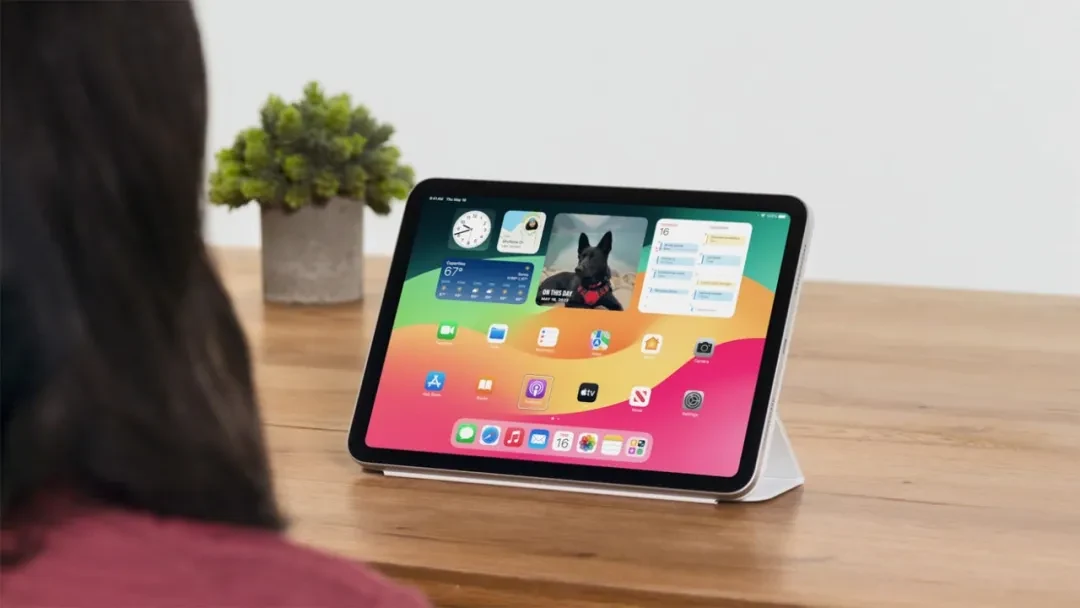
2024, image source: Apple
In one interview Herrlinger gave a demonstration: she had the reporter cover his ears with both hands and pressed a small, clear plastic cone connected to a hearing aid against his forehead. He could no longer make out what Herrlinger was saying, but he could clearly hear the Beatles' "Come Together" streaming over Bluetooth from a nearby iPhone — the music seemed to be playing right inside his head.⑫ Why do this demonstration? Because for someone whose hearing is fine, it is probably very hard to really grasp that "having sound" and "responding to the world through sound" are not things some people can take for granted.
What Apple has done for educational equity can be understood along the same lines, but I won't go into it here. What is worth noticing is where Cook himself stands. He grew up in a blue-collar family in Alabama; his father worked at a shipyard and his mother at a pharmacy. Cook grew up in a conservative Southern environment and happened, on top of that, to be gay. As a child he saw a church connected to Martin Luther King burned. I think this may have given him a kind of sensitivity that someone like Jobs could not have: attention to the excluded, attention to people who live outside the default way of life. As is well known, he was the first CEO of a Fortune 500 company to come out publicly as gay. In 2014 he said: "I'm proud to be gay, and I consider being gay among the greatest gifts God has given me." And he went on: "I don't consider myself an activist, but I realize how much I've benefited from the sacrifice of others. So if hearing that the CEO of Apple is gay can help someone struggling to come to terms with who he or she is, then it's worth the trade-off with my own privacy."⑬
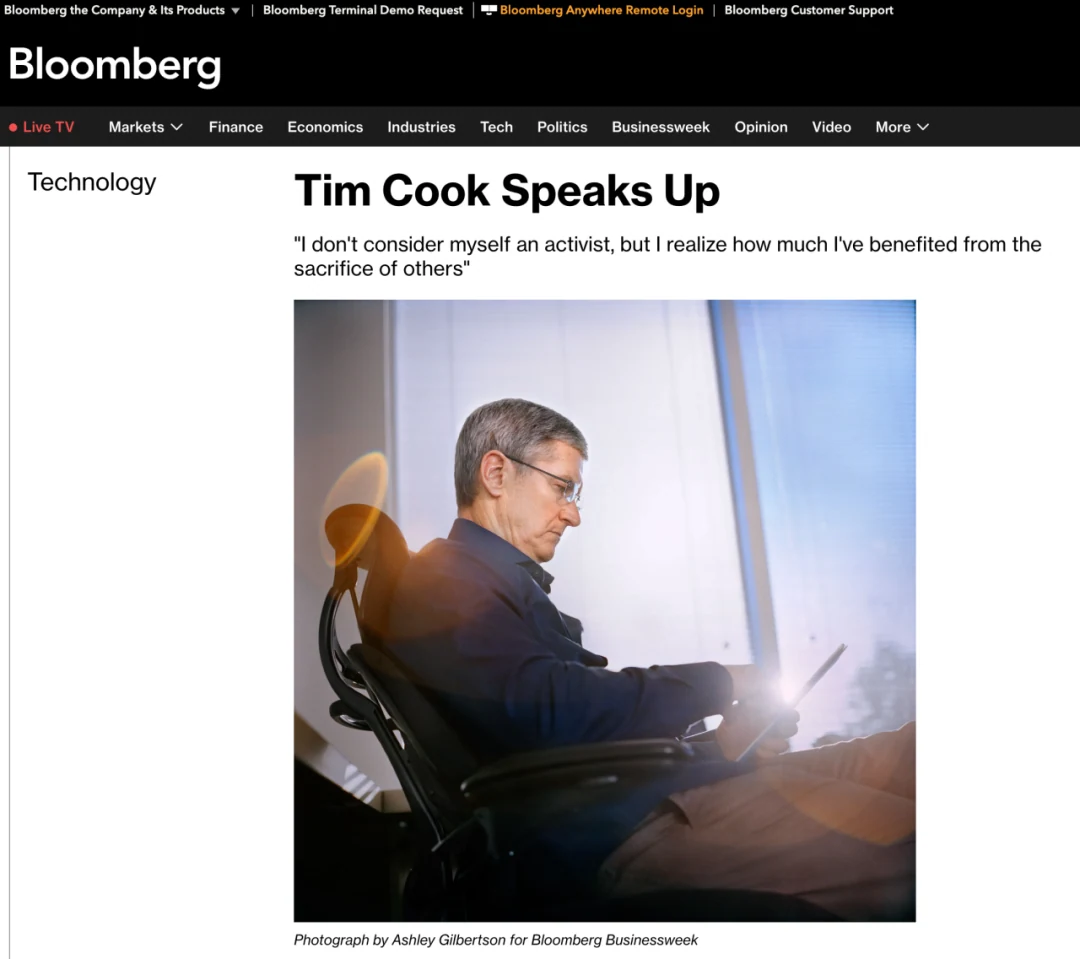
Screenshot from the Bloomberg Businessweek website, photo by Ashley Gilbertson
These words, like the lines of Cook's farewell letter of thanks on leaving the job, are calm and sincere, but they carry an extraordinary courage. In early 2025, the Trump administration pressured companies to drop their diversity policies, and Meta and Amazon both scaled back their programs. At Apple's shareholder meeting there was a proposal to end its diversity policies; Apple's board recommended that shareholders vote against it, and the proposal was defeated. Cook's view was that although Apple's diversity practices might have to change form as the legal environment changed, the core commitment would not.
The courage this kind of persistence requires is not easy to recognize, because it does not look like "courage" as we usually picture it — making an either-or decision in the face of a choice that might end in ruin, and bearing the consequences. We are used to regarding the latter as pioneering and new, and we admire that sort of world-founding decisiveness. But to keep up, steadily, in an unfriendly environment, a kind of attention the environment itself does not encourage you to keep up; to use that attention to push the environment itself to change; to be willing, in the process, to reduce your own presence to something negligible, in order to push back against a resistance that is everywhere and never lets up — doesn't that take something we have to call "courage"?
That Jobs invented the best products has become a sort of consensus, beyond dispute. But is that what decides Apple's uniqueness in the history of human technology? I think the question took on a deeper significance in the Cook era: yes, we have the best products, but whom should they belong to? Back to our original question — the Jobs era was indeed driven by "innovation," while Cook, the "master of supply chain management," chose to drive Apple by "operations." The latter looks more mediocre. But when we say that Apple (or technology) has changed "our" lives, who counts as one of this "us"?
Push the situation a little further, to an extreme: suppose we had the best, most innovative device in the world, but nobody knew how to use it. Would we think of that machine as an epoch-making product? Now people like Herrlinger and Cook have extended the reference of the "rest of us" Jobs first spoke of to include blind people, deaf people, people with physical disabilities, students with cognitive disabilities, people with ALS facing the loss of speech, young people in Brazil's favelas, Black girls in rural Alabama schools, and others — and some people in the world have not even registered that these people live on the same planet they do and are just as entitled to use technology as they are. But the process of extension itself is invisible. It cannot enter our attention in the form of "One more thing." Because this extension, this accumulation, is not an explosive moment to begin with. It happens in the lifeworlds of entirely different people, and in entirely different places, and no launch-event stage can hold such heterogeneous experiences. Yet for a blind person unlocking a phone on their own for the first time, for a person with ALS who can hear the phone speak to their family in their own voice, each of these things is an "iPhone moment": a rupture whose possibility could not be imagined beforehand and which afterward becomes part of everyday life.
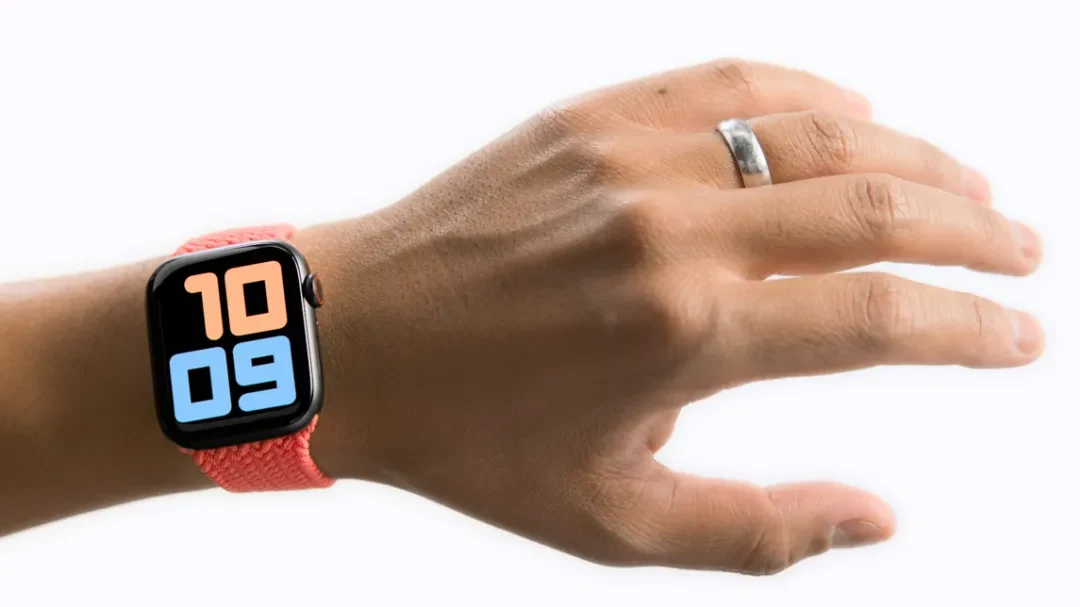
2021, image source: Apple
The significance of accessibility goes further than this. If we erased this dimension from Apple's corporate philosophy, the result is easy to imagine: every one of Apple's product innovations could at the same time become a deepening of exclusion. The iPhone gave sighted people a whole new way of interacting with the world, but without VoiceOver it would also have made digital life even less possible for blind people. From 1985, when Brightman set up the Office of Disability, to today is forty-one years, and yet the institutional continuity has held remarkably firm. Over that time, how many Herrlingers (though we will never know all of their names) have worked day after day where no one was watching, and, in places no camera or news report would pay attention to, made small ruptures in the lives of particular people?
It is true that Apple under Cook did not reinvent the iPhone a second time, but it has kept steadily, strenuously redefining the boundaries of the word "us." All of its strength comes from the accumulation that this persistence produces. The importance of this accumulation lies not in an opening toward the future, not in those unique moments when human beings bring something new into the world, but in a kind of maintenance. By letting more people describe their own particular identities and selfhood through the objects, practices, and rituals we find ourselves among, it maintains the world we share. As Marion Young once said: "Building, as a creative founding, is a rupture in historical continuity. But the temporality of preservation is cyclical." This cycle itself is precisely what opens up diversity — or rather, what makes the emergence of diversity possible. Maintenance can keep the world as it is, but it can also change it. In a world that still contains, and will go on containing, a great deal of exclusion and inequality, its significance and weight should be no less than those of any heroic moment of creation.
Notes
1 Chen Xiachang. "Cook's 15 Years: A $4 Trillion Business Empire Takes Shape, the Soul of Innovation Departs." Securities Times Online (stcn.com), 21 Apr. 2026, https://www.stcn.com/article/detail/3773749.html.
2 Heisler, Yoni. "Scott Forstall and Jony Ive Refused to Attend Each Other's Meetings." Network World, 4 Nov. 2012, https://www.networkworld.com/article/743184/data-center-scott-forstall-and-jony-ive-refused-to-attend-each-other-s-meetings.html.
3 He Tongxue ("Hello Teacher, I'm He Tongxue"). "[He Tongxue] The Cook Era." Bilibili, 1 Sept. 2026, https://www.bilibili.com/video/BV1G7tG6tEwL/.
4 Apple Computer, Inc. "Apple Macintosh Advertisement." 1984. Computer History Museum, https://www.computerhistory.org/revolution/personal-computers/17/303/1201. Accessed 18 Sept. 2026.
5 National Federation of the Blind. "National Federation of the Blind Commends Apple for Including VoiceOver on iPad." PR Newswire, 28 Jan. 2010, https://www.prnewswire.com/news-releases/national-federation-of-the-blind-commends-apple-for-including-voiceover-on-ipad-82964927.html. Riccobono, Mark A. "Comments on Apple and NFB Resolution 2014-12." National Federation of the Blind, 11 July 2014, https://nfb.org/blog/vonb-blog/comments-apple-and-nfb-resolution-2014-12. Reprinted as "Text of NFB President's Blog," posted by Marianne Denning, MacVisionaries, 13 July 2014, The Mail Archive, https://www.mail-archive.com/macvisionaries@googlegroups.com/msg106813.html.
6 Mosen, Jonathan, host. "Apple at 50, Blind People and Our Allies Shaping Apple Accessibility Innovation." Access On, episode 69, National Federation of the Blind, 1 Apr. 2026, 00:02:13–00:02:34, https://accesson.pinecast.co/episode/79143418/apple-at-50-blind-people-and-our-allies-shaping-apple-accessibility-innovation.
7 Herrlinger, Sarah. "Sarah Herrlinger on Accessibility at Apple | SXSW 2024." Interview by Lucy Edwards. YouTube, uploaded by SXSW, 20 Mar. 2024, https://www.youtube.com/watch?v=o-EXcUjgRjY. 00:18:14–00:19:26.
8 Herrlinger, Sarah, and Christopher Patnoe. "Inform & Connect, Season 2: AFB Trustees Sarah Herrlinger and Christopher Patnoe." Interview by Melody Goodspeed. Inform & Connect, season 2, American Foundation for the Blind, 20 May 2021, https://www.afb.org/news-publications/afb-studios/afb-possibilities-podcast/season-two/herrlinger-and-patnoe.
9 "A Disability Advocate Preserves His Voice with iPhone." Apple Newsroom, Apple, 30 Nov. 2023, https://www.apple.com/newsroom/2023/11/a-disability-advocate-preserves-his-voice-with-iphone/.
10 Herrlinger, Sarah. "When You Design for the Margins, You Make Better Products for the Masses." Scandinavian MIND, 8 Mar. 2024, https://scandinavianmind.com/when-you-design-for-the-margins-you-make-better-products-for-the-masses/.
11 Herrlinger, Sarah. "Sarah Herrlinger on Accessibility at Apple | SXSW 2024." Interview by Lucy Edwards. YouTube, uploaded by SXSW, 20 Mar. 2024, https://www.youtube.com/watch?v=o-EXcUjgRjY. 00:17:18–00:17:26.
12 Ulanoff, Lance. "Apple Exec: Accessibility Is a Human Right." Medium, 14 May 2018, https://medium.com/@LanceUlanoff/apple-exec-accessibility-is-a-human-right-62566259b2b3.
13 Cook, Tim. "Tim Cook Speaks Up." Bloomberg Businessweek, 30 Oct. 2014, https://www.bloomberg.com/news/articles/2014-10-30/tim-cook-speaks-up. Reprinted in Graphic Online, 30 Oct. 2014, https://www.graphic.com.gh/international/international-news/tim-cook-speaks-up.html.