Understanding Jay Chou
Every year when Jay Chou puts out a new album, a certain "decline theory" makes the rounds: the idea that he has used up his gift. People have been saying this since his debut. Judging from the reviews of Greatest Works of Art and Children of the Sun, the decline theory is still as common as ever. I started listening to Jay Chou in primary school, and for a while I was so taken with these records that I could sing every lyric of every song from start to finish. That memorizing kind of fervor faded after Opus 12, though, and my taste in music drifted further and further away from his direction. Even so, I have listened carefully to each new album as it came out. You could say I started listening at ten and have kept listening until now, at thirty. After hearing this year's album I had some thoughts, or rather some ideas: these two recent albums have, if anything, given me an urge to "understand" the changes that have happened in Jay Chou. I have an instinctive distrust of the decline theory. To put it simply: a few songs on these two albums may well end up being regarded as the representative works, or even the masterpieces, of this period of his career; but I also don't think these two albums are really on the level of the Jay and Ye Hui Mei years. This verdict may be too close to fence-sitting, so much so that it looks entirely unremarkable. Maybe so.
The song on the new album that first caught my interest was "The Tender Women of Xiang." Not only because the title itself has an odd flavor to it: in the way it imagines a particular type of woman, it has a smeared-on quality that makes one more or less uncomfortable. But also because its lyrics openly pay tribute to "Niang Zi," which happens to be one of my favorite Jay Chou "China wind" songs. On Youtube I saw that the top comment on the song called it "the 2026 version of 'Beauty Like Frost.'"

In his later years, Jay Chou's "China wind" has become something like a trademark, and the way it expresses itself increasingly gives the feeling of someone tracing a picture card. Why should this be? After all, as far as what the lyrics mean is concerned, there seems to be no essential change from "Niang Zi" to "Beauty Like Frost" to "The Tender Women of Xiang": they are all variations on the figure of the longing wife from classical literature. And yet "Niang Zi" gives me none of the discomfort I feel listening to "The Tender Women of Xiang." At first I thought the reason was that "Niang Zi" is an obviously fictional story: it really does not take place in the "present," so the person singing it naturally has to keep some distance from it. But there is much more to it than that. A song is, in the end, something you listen to, and its artistic quality cannot be explained purely by analyzing its narrative and meaning.
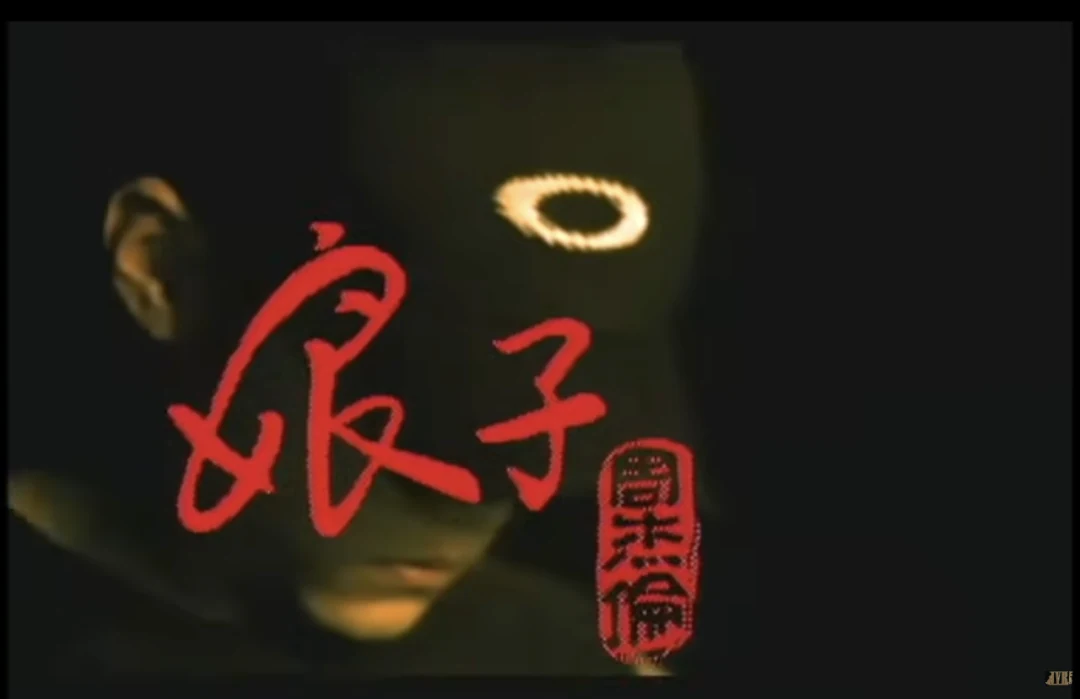
The reason I still love "Niang Zi" lies in its arrangement: an extremely dense instrumental texture. There is an almost brutal energy in it, the erhu and the strings crashing into each other. Listening to music like this, our attention is almost entirely on the musical adventure Jay Chou was on at the time. I doubt he had any ambition back then along the lines of "I'm going to invent China wind." As for what it expresses, the narrator of "Niang Zi" feels that his own situation is not safe. He is anxious and uneasy, and between him and his "lady" there is an uncertainty born of distance and hardship. This uncertainty keeps the woman he sings about from being simply taken in and digested by a possessive gaze. By the time of "The Tender Women of Xiang," though, "China wind" had become a category Jay Chou could produce without effort; he no longer needed to wrestle with his material. This ease means that the arrangement can no longer hold the listener's attention as a powerful aural event. So the female imagery in the lyrics gets pushed into the foreground and becomes the main source of the song's aesthetic pleasure; but this image of women is precisely the kind of thing that has never held up under close inspection. The singer (who is also the narrator) in "The Tender Women of Xiang" and "Beauty Like Frost" occupies a very safe position of aesthetic contemplation. There is no distance between him and the woman he describes, no distance that might resist a gaze bent on sameness. The woman being depicted is simply laid out, entire. (I am not saying that the only legitimate way to portray women is as "mysterious and impenetrable"; that is just another cliché we should be wary of.) "The Tender Women of Xiang" is a man who has nothing to lose, leisurely showing his listeners the image of a woman who exists only for him, and it is hard for that not to make one uncomfortable.
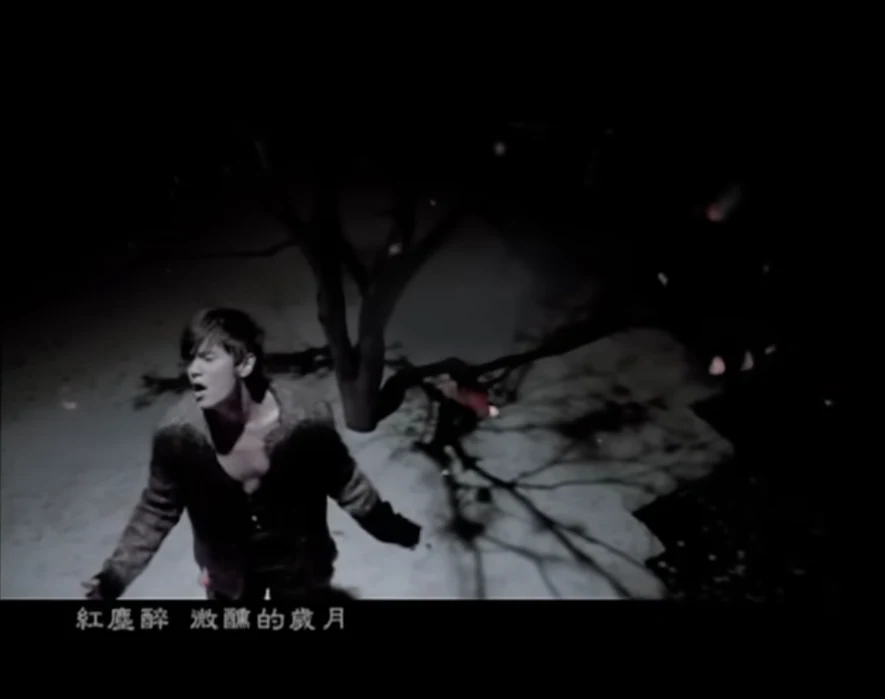
But consider a song like "Hair Like Snow," which is every bit as contemplative as "The Tender Women of Xiang." Why doesn't "Hair Like Snow" end up the same way? The key is that what "Hair Like Snow" expresses is extremely excessive. The last line, "drunk on the red dust," shoots up to a G5, and you get the feeling he can barely reach it. Vincent Fang's lyrics are themselves as ornate as can be; the images are so many and so elaborate that their sheer multiplicity turns around and cancels the possibility of examining any one of them on its own. The narrator of the song is himself being devoured by the relationship, even caught in a state of self-consumption bordering on uncontrolled self-destruction. And this state means that he is not occupying a lofty position of aesthetic contemplation. This self-destructiveness undoubtedly means pain. And it is precisely the shape of that pain that changed enormously in the later China wind songs.
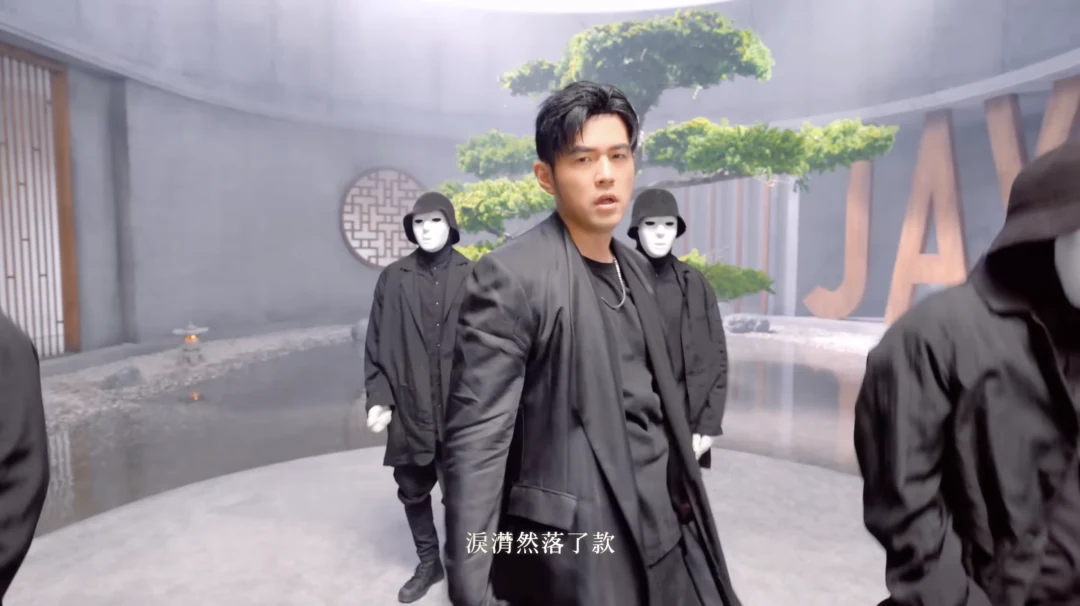
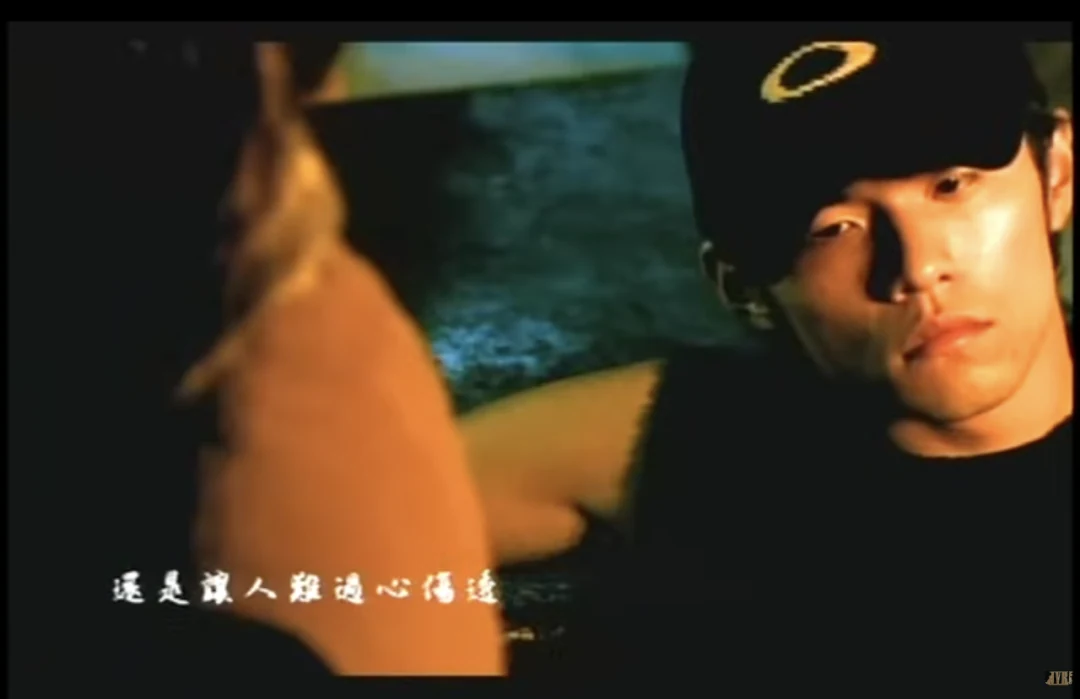
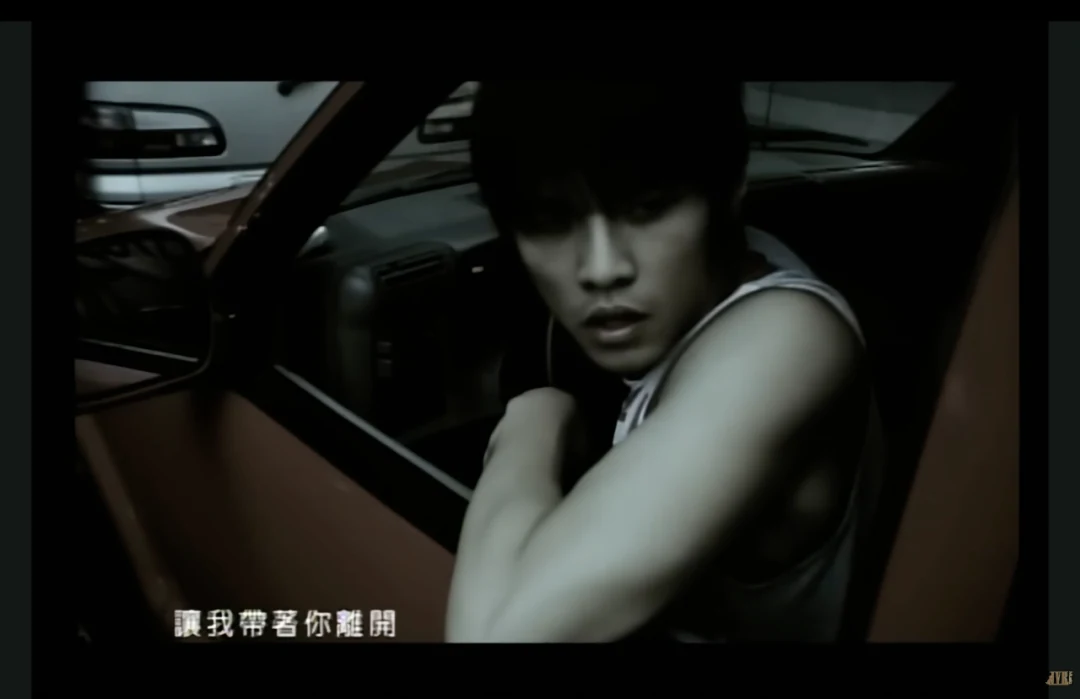
"Beauty Like Frost" draws on "The Phoenix Seeks His Mate," but in fact everything in it works to make pain sentimental. It is not only Jay Chou who has become easy and polished; so has Vincent Fang. Even the most grievous parting between the living and the dead carries no weight whatsoever in "Beauty Like Frost." In "Niang Zi," by contrast, lines like "The scenery turns to autumn / the sky full of yellow sand has gone cold / the inns north of the frontier are crowded / is there any pasture / my horse is getting a little thin" have an ironic playfulness to them, and so a nimble awareness of where the speaker stands; more importantly, these things do not serve the business of making longing or pain beautiful. They have a kind of honesty that can only appear when you are "not taking it seriously." The energy in "Hair Like Snow" comes from an excess that is almost unbearable, but in "Beauty Like Frost" and "The Tender Women of Xiang" that pain has been tamed until it is smooth, entirely in the service of being looked at. The latter songs also sit extremely close to the "China wind" genre itself, so close that every element in them is a "typical" China wind element. To make a comparison, it is like a writer who sets out to write "the typical environment within the typical environment," every item of whose characters is "typical," with the result that real individuality disappears. When a song fits the "China wind" formula perfectly in every respect, it may be a very "China wind" song, but that is exactly what makes it hard for it to be a good song. "Niang Zi" cannot be tamed by the "China wind" label; there is a self-evident aggression in it (you can feel it just watching how Jay Chou carries himself as he sings in the MV) and a violent temperament. It is the latter that keeps "Niang Zi" from sounding dated even now. Just as what really makes Nastasya who she is is not her class position but the act of throwing the banknotes into the stove to burn, that passion, and the ungraspable force that comes from it.
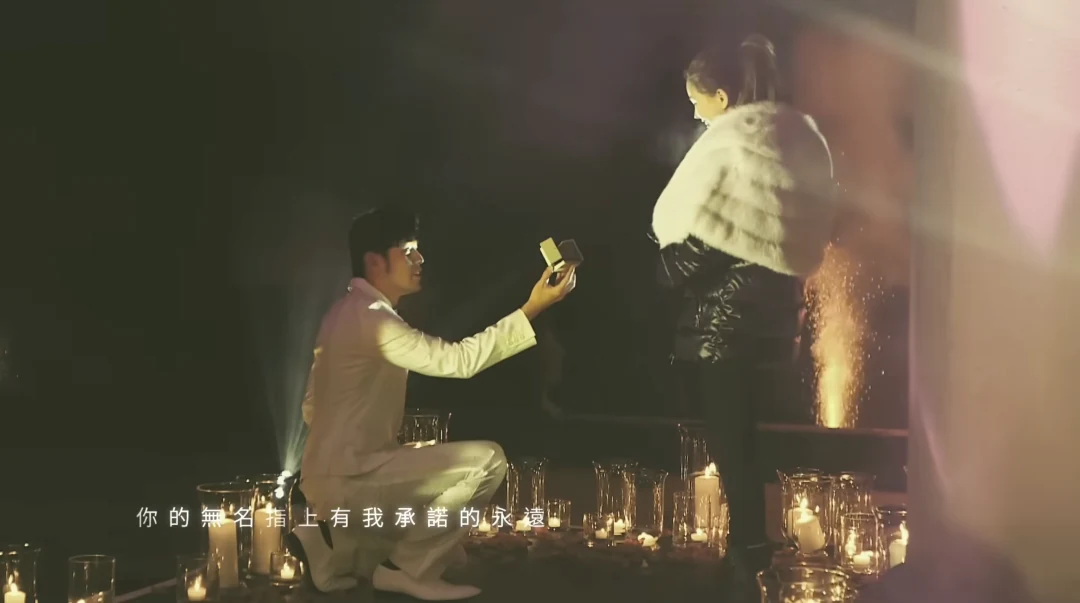
The early Jay Chou was full of pride and conceit, even narcissism (depending on your impression of the man). You could also say this pride has carried on to the present. It is deeply bound up with his hero-and-prince complex. You can get a sense of this from his proposal to Hannah Quinlivan and their wedding. In "I Do" he shares the story of his proposal, and we have no reason to doubt the sincerity of the sharing. But in the MV, Hannah is wearing a not very presentable black down jacket when she is proposed to, while Jay Chou is in a splendid white suit. Granted, this white suit was one Hannah had once told him she liked, one she had picked out. And of course it is also presumptuous to assume that Hannah would feel uncomfortable about this. At least judging from how invested she is in the relationship, she may not mind these things at all. This kind of narrative does nothing for me, but that does not mean the people inside it ought to feel the way I do.
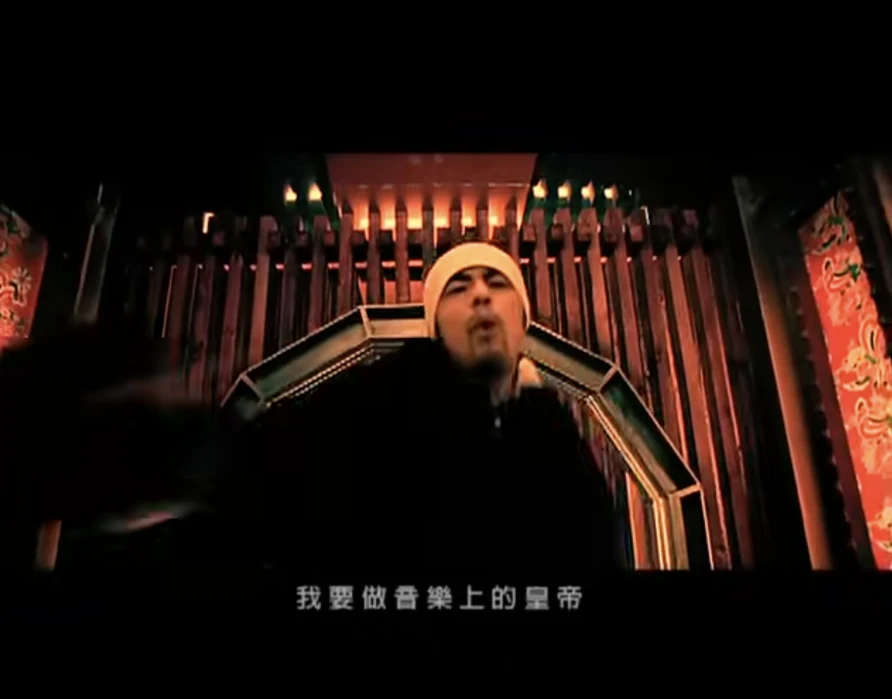
On the whole, though, I find that looking back at the various proud gestures of his early years is not tiresome; if anything, they come across as endearing. When someone chooses to name his debut album after himself, you can already see his ambition and pride. Early on he even wrote a song like "Red Imitation" ("I want to be the emperor of music"), and in "Listen to Your Mother" we hear lines like "in the future, what everyone reads will be the comics I draw, what everyone sings will be the songs I write." On the surface, he has kept this pride in recent years too, that is, a conceited sort of certainty about his creative talent, which he sometimes asserts by repeating over and over how effortless writing is for him. Still, I feel that something about it is different. The relationship between real pride and a certainty about one's own powers is usually not as simple as an equation. As I understand it, the early Jay Chou's pride was inherently accompanied by the appearance of vulnerability. The young Jay Chou's pride had something of a wager about it. He was surrounded by a refusal to give in and by a situation in which he might lose. When a person realizes that he is at risk of failure, pride turns, out of that sense of danger, into something like uprightness. We can see this uprightness in Du Fu's lines "At seven my thoughts were already bold; I opened my mouth to sing of the phoenix" and "Poetry is my family's business; people pass on the feelings of this world." Uprightness is a state in which something inside a person will not bend, and so keeps rubbing up against the world. Du Fu was upright his whole life, and this is not at all in conflict with the fact that he stayed within Confucian bounds his whole life.
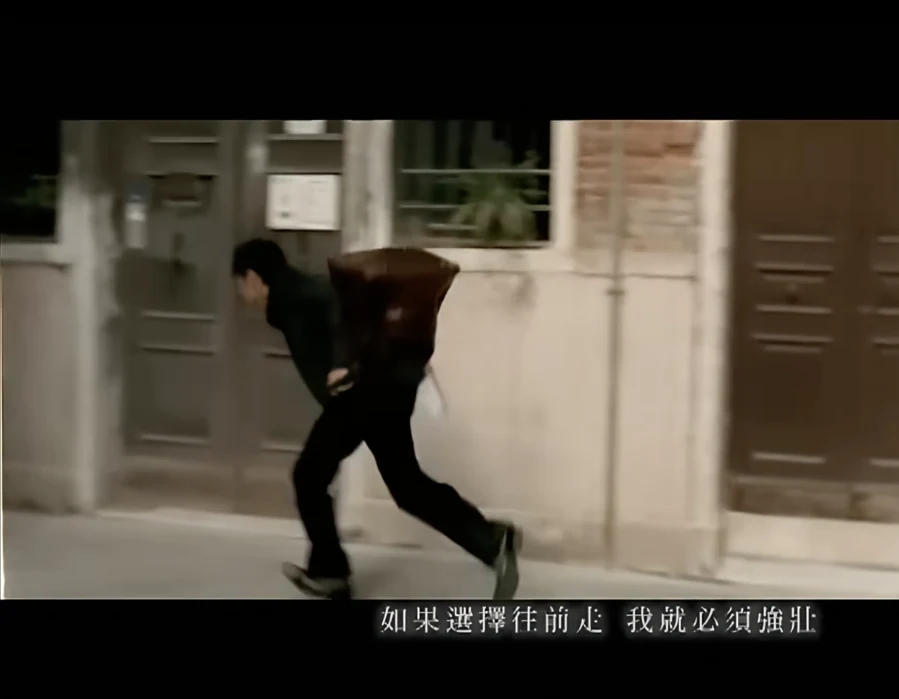
The Jay Chou of "Besieged on All Sides" is under siege; his pride there is not self-intoxication but has a strongly combative stance. This combative stance presupposes the existence of opponents and presupposes the possibility of defeat, even though he stubbornly refuses to admit it. Yet from his early years to his late ones, Jay Chou has never stopped declaring his own creative ability. Writing has never been hard work for him.
The question, though, is this: how is the way he declares his talent on Greatest Works of Art and Children of the Sun different? To put it somewhat one-sidedly: when the early Jay Chou stressed that he wrote songs quickly and well, it was a fact; in the later period, with the gaps between albums getting longer, stressing how effortless it is seems more like a kind of preemptive defense: "It's not that I can't do it, I just don't put all my energy into it" (and I think Jay Chou really is under no obligation here; no one should demand, or expect, that anyone devote a whole life to music). Does a truly confident person need to prepare a framework of explanation for a possible failure in advance? I have my doubts. Greatest Works of Art and Children of the Sun both, on the face of it, refer to artists and works of art, but it is hard not to read them as self-descriptions. Whose works are "the greatest"? Are they those of Sanyu and Magritte, whose works he features in the MVs, or his own? Who is the "child of the sun"? True, the album's English title is Children of the Sun; true, the name comes from a nickname Jacky Cheung gave Jay Chou (in May 2023, during Jay Chou's concerts in Hong Kong, there were violent storms, but the rain would stop as soon as he started singing, so Jacky Cheung sent him mangoes printed with the words "child of the sun" along with a handwritten card); but once it becomes a title in such a solemn way, "child of the sun" can hardly go on existing purely as a word about the weather (imagine what it would mean if Jam Hsiao called an album "Rain God"). It becomes a symbol. Everyone knows that "child of the sun" has more or less the flavor of the master describing himself; and the English title then softens that impression. This wavering between modesty and self-description is precisely what loses the openness of his early proud declarations. He needs all sorts of ways to leave himself an exit and a buffer zone in what he says, whereas before he had no need of such a buffer, because there was no crack between his pride and his work that needed covering up. What I mean is this: the title track of Greatest Works of Art is a creator talking, in music, about great art and great creation, but when someone wants to use a song to "say" that he is great, and the musical achievement of the song is not enough for the listener to reach that conclusion unaided, pride becomes a posture. In other words, when the persuasive force of a work's artistic quality declines, the pride that was once embedded in it gets turned into a theme. And pride is exactly the sort of thing that can least bear being turned into a theme; it makes a person stiff.
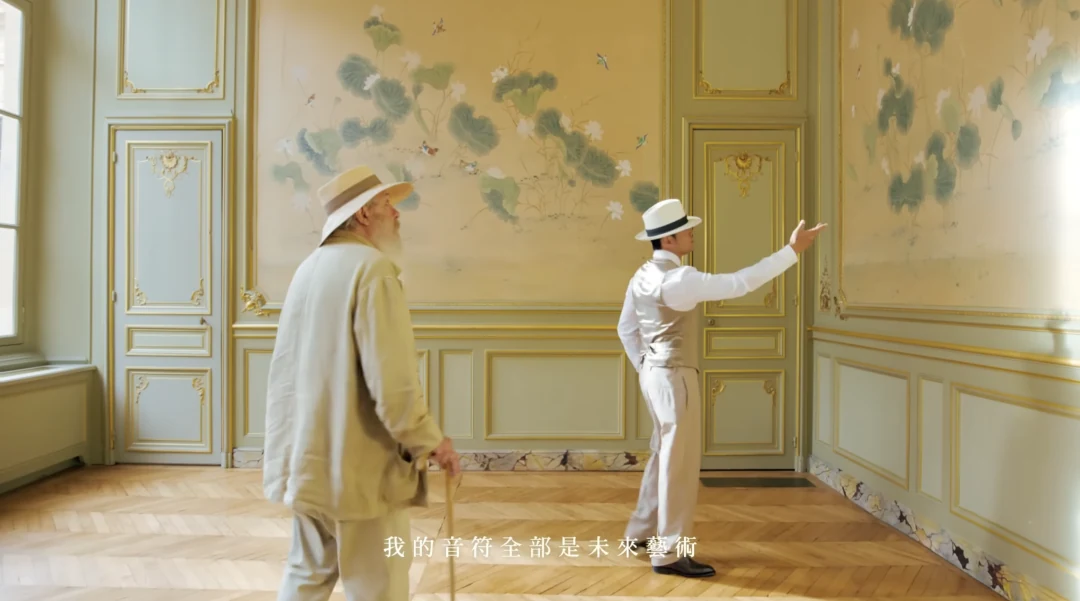
I mentioned earlier that the early Jay Chou's pride felt closer to a combative stance; it presupposed the existence of opponents, and so still had a certain weight to it. But now he really has swept all before him. Even on today's Chinese-language pop scene, it is still hard to find anyone whose creative ability and influence can match Jay Chou's. His Greatest Works of Art and Children of the Sun are still top-tier compared with other Chinese pop music today. He is indeed still the king of Chinese pop, but he can at the same time be someone who is moving away from his best creative form. The fact that no one can yet match Jay Chou seems to say more about the state of the Chinese music scene itself as a culture industry.
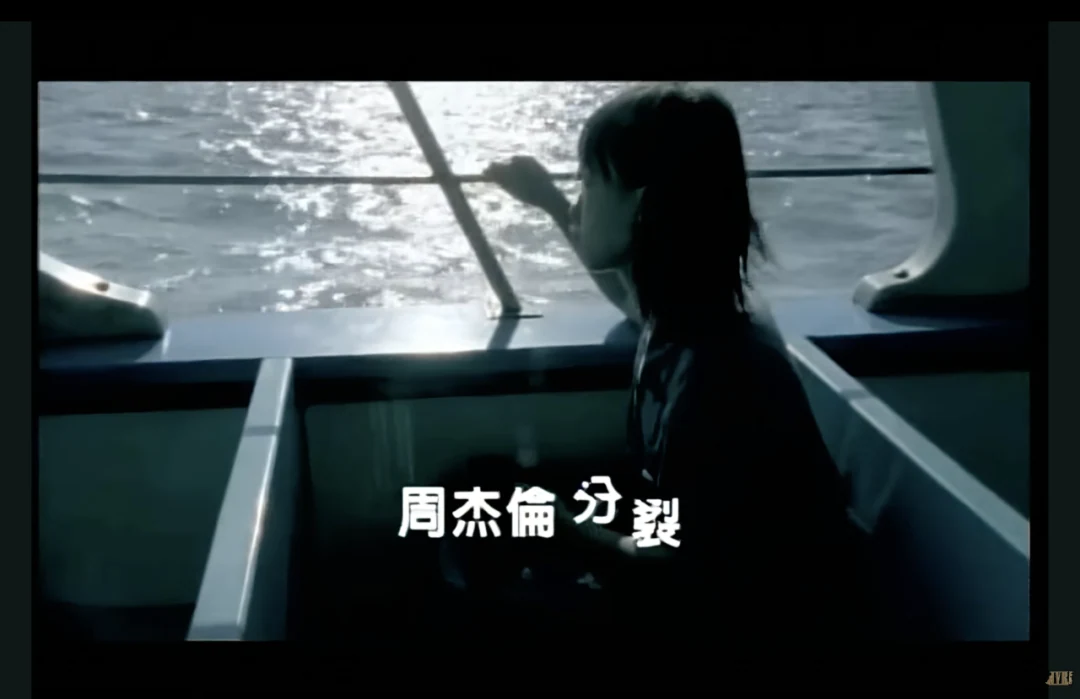
But this is not to say that anything changed in his pride itself, early versus late. I think of my own favorite Jay Chou song, one that, among all these hundreds of songs, may still have no equal for me: "Split." As it happens, Jay Chou wrote the lyrics to this one himself.
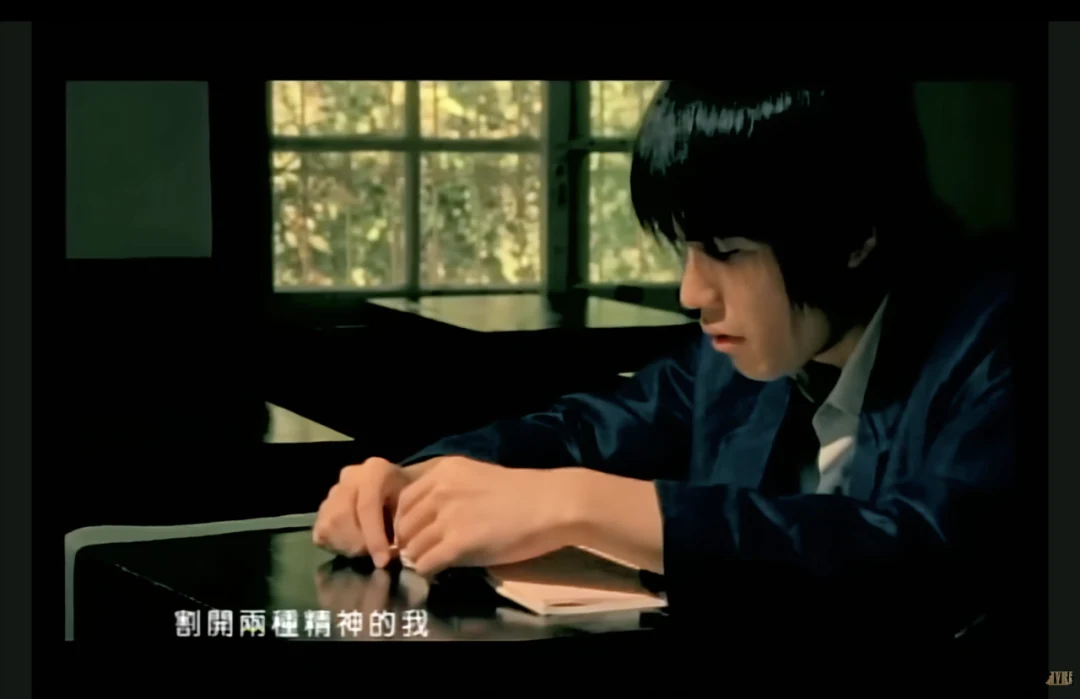
For me, "Split" gains a kind of rough-edged gleam from its absolute lack of ornament. "Before time notices, let me take you away; from both positions, I'll have your back": quite obviously, what he wants to state is the split between the "Jay Chou" society demands he become and the "Jay Chou" he thinks he is. We could also say that there is a tough self here and a self that can barely breathe. Everyone is familiar with this plurality of selves. The tough, determined "Jay Chou" wants to rescue the other "Jay Chou" from the environment that is all but crushing him, and so decides to "leave." This self shows its toughness by protecting the other self: protecting it from being flattened by society's rules. And the relatively weak "Jay Chou" is not denied or discarded either. In the song he still defends his weakness and hesitation. In the second chorus, Jay Chou changes "at first no one noticed me," as he sang it the first time, into "at first no one noticed you and me": the world turns a blind eye to both of us; whether it is the weak you or the tough me, in the eyes of the outside world neither of us exists.
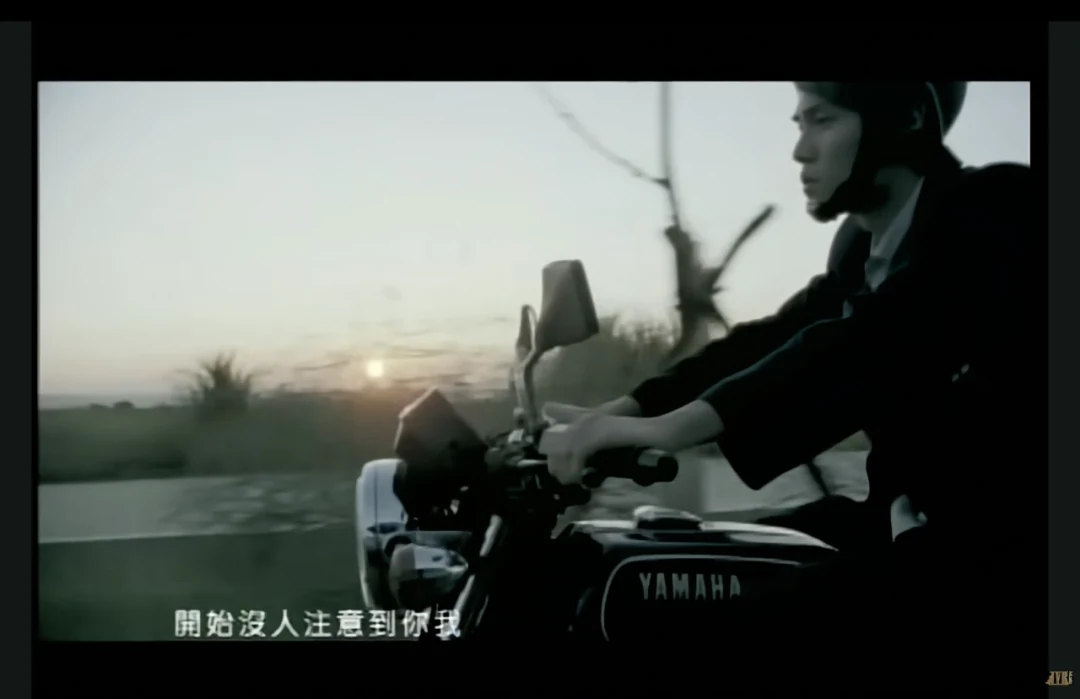
Going back to "Besieged on All Sides," which I mentioned before: on the surface he is showing off his pride, and he appears in an extremely aggressive posture. But the figure Jay Chou cut in that song feels more like an animal backed into a corner, forced to bare its claws in self-defense. You can tell from the title alone that it does not fundamentally come from a sense of superiority. The Jay Chou of that time, facing all the world's affronts, had not yet acquired any buffering mechanism, so he could only protect himself and those around him in the most instinctive way.
In other words, what I want to say is this: his pride has always contained, and been premised on, a protectiveness toward (himself and) others. And protectiveness is premised on an awareness of vulnerability. It is precisely because of this that his pride does not sink into a tiresome trait. In "Split," he is sure that he has absolute talent, and he also knows clearly that he must protect the people and things that are as vulnerable as he is. He could be so sure of his talent precisely because it was what the young Jay Chou depended on to survive; and the reason this protectiveness existed is perhaps that he had always felt, keenly, what it is like to rub up against the world.
The story goes that in 2012, when a reporter asked Jay Chou whether he had proposed to Hannah Quinlivan, he grinned at first: "When we get married I'll let you know." When the reporter asked when he would send out the wedding invitations, Jay Chou answered: "When you die." The next day he explained that he thought the paparazzi's questions had gone too far: "He saw me leaving by the back door and asked whether I'd liked using the back door ever since I was a kid, and he did it right in front of my mom." Still, there is a widespread impression that after Jay Chou got married and became a father he grew "gentler." He has said so himself: he is no longer inclined to clash with the paparazzi or other people the way he did in his early years, and he even buys the paparazzi bubble tea. In fact, though, I think this uprightness has been an extremely stable trait in Jay Chou from beginning to end. It has not been softened or blunted with age. Behaving more gently does not mean his capacity to understand others is any greater than when he was young. Everyone knows what happened in his falling-out with Jacky Wu; more telling still, Jay Chou didn't even invite Jacky Wu to his wedding. His protectiveness toward others and his absolute confidence in his musical talent both come from this uprightness. If this trait has never changed, why does he seem so gentle now? And why does the pride in his recent work still strike people as "off"?
I don't think the reason is hard to find if you think about it carefully: what has changed enormously is his concrete, unfiltered contact with the world, and the way those contacts are tangled up with one another. I am sure that even the present-day Jay Chou, if a paparazzo got in his face the way they did when he was young, would be extremely displeased and might even do something offensive (the incident not long ago when he told a security guard at a concert to "get out" is proof enough). It is just that the various things that would have provoked him in his youth are now filtered out before they reach his lived experience. The structure of his life shuts out most intrusions, and so he looks a bit gentler. Imagine that the Jay Chou of 2006 had the living conditions of the Jay Chou of 2026: he would probably seem just as gentle.
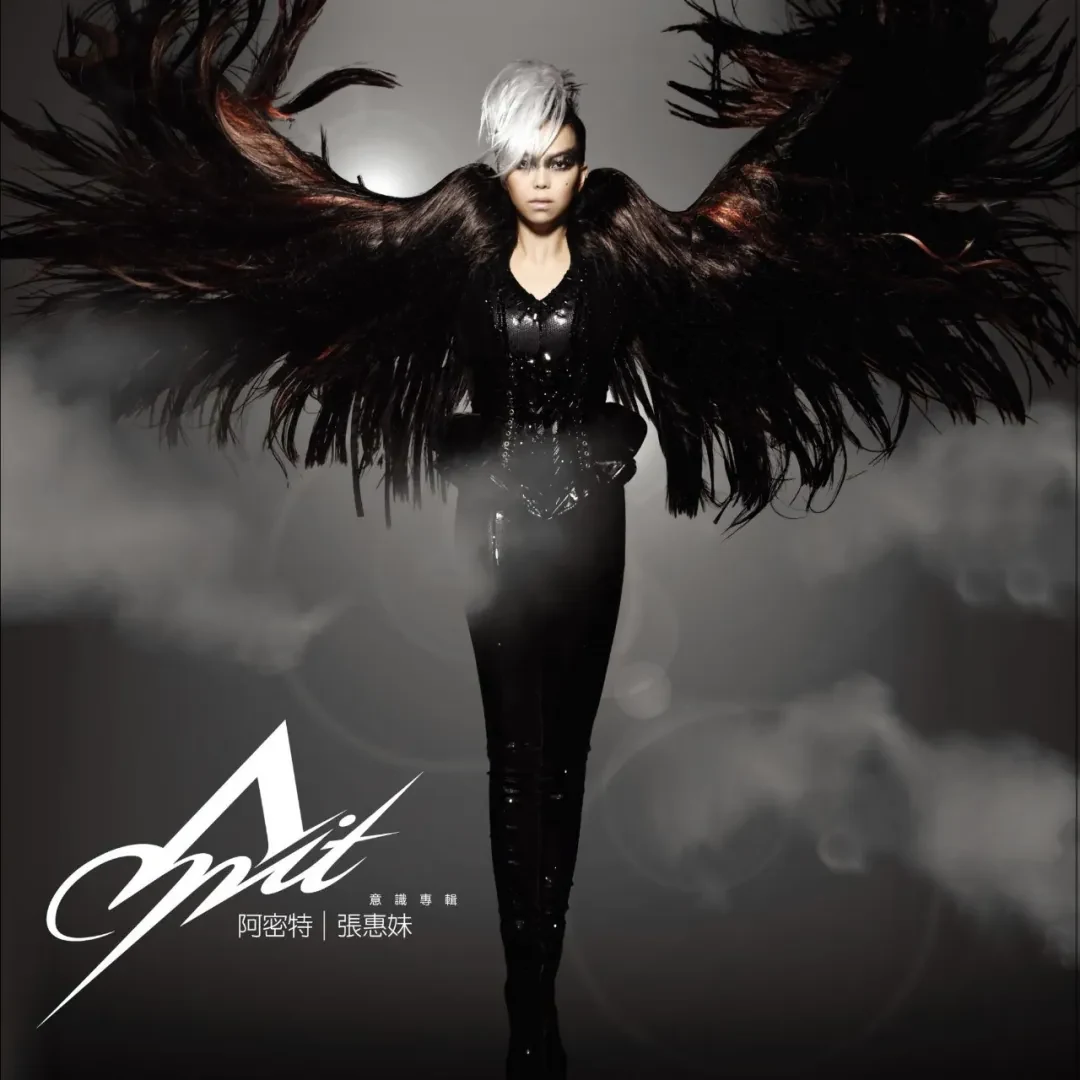
Jay Chou once deeply envied A-mei for being able to release Amit. Amit is A-mei's Puyuma name. He wanted to be an "Amilun" too, putting out two albums a year, one full of positive energy and one cynical about the world. But his company wouldn't agree. After On the Run, songs with an offensive edge, like "Dad, I'm Home," "The Grief That Stops War," and "Grandma," gradually disappeared. In fact, though, he has never lacked the ability to keep writing such things, because his consistent uprightness, his playfulness, and his protectiveness have not disappeared. It is just that they often need to be activated by some external condition before they can turn into the density we feel in his work. To put it another way, even if his company agreed to let him be "Amilun," what would that album's cynicism actually be aimed at? A person living surrounded by layer upon layer of protection and buffer zones cannot rage at thin air. His life no longer often requires him to stand up for himself or for others the way it used to.
His creative work has always depended on a high degree of intuition and bodily feeling, and his best works, as I see it, all come from there. There is also a view that Jay Chou is living too comfortably now, and that is why he can't write good songs anymore. Following the line of thought I've just laid out, this would seem to follow naturally. But from a humanitarian standpoint, and from the standpoint of basic ethics, we have no right to demand, and should not expect, that a person remain in pain and keep turning that friction-filled life into artworks for us to enjoy. Nor, of course, should we demand that Jay Chou always be able to write songs the way he used to; or rather, we should never have had such an expectation in the first place. It is not because Jay Chou is too happy that he can no longer write songs like he used to. That view assumes that only suffering can nourish creative work, and this is not the case at all. Bob Dylan, for example, kept producing masterpieces after he became famous; even the work he made in his late seventies (Rough and Rowdy Ways) can be counted among the best things he has done in decades. Cohen even spent some time as a monk in a monastery, and part of the reason he later returned to the world was that he discovered his manager had drained nearly all his savings while he was in seclusion, so in old age he had to tour to make a living. Several masterpieces came out of that period. Creativity is an extraordinary intensity of experience; pain is merely the consequence of that intensity lacking support in reality, as you can see in Antonin Artaud, and in Sylvia Plath. And what we get from so-called "creation born of suffering" is, at bottom, what is left over of the creator after the suffering has struck. A person can be in terrible pain and at the same time produce terrible work.
What I want to say is that only when a creator never settles comfortably into some safe position can he keep that friction-filled experience and the intensity of facing the world directly. Each of Jay Chou's early albums had an enormous inner richness; a single album could take on domestic violence, gothic horror, teenage romance, historical nostalgia, and more, and could even range across different world civilizations. That was undoubtedly an author who would not settle into any fixed position. On the surface, Greatest Works of Art and Children of the Sun also have a rich spread of subject matter, but the fundamental difference is that the later work, on the whole, feels warm and pleasant; even the ghost-hunting story in the "Children of the Sun" MV has a genre-style darkness and lacks the darker, offensive emotional texture of "Terraced Fields" and "The Grief That Stops War." Of course, this has to do with JVR Music's business strategy and cannot be blamed entirely on Jay Chou himself.
Still, if we come back to what it means to be a creator: if a person has lost the resistance that used to create friction for him and still wants to keep that intensity of experiencing the world, he needs to create new resistance for himself. To make a comparison, anyone who has done any weight training knows that a four-day split leaves you with almost no day on which some muscle isn't sore, and that only this way do the muscles grow. Of course a person can also create without relying on this kind of friction or resistance, because even happiness and joy, if perceived and experienced with very high density, can give rise to extremely powerful work. The problem is that sometimes a buffer zone wears down a person's ability to activate the density of his own perception. Seen from this angle, the pride on Greatest Works of Art and Children of the Sun may become a little clearer: before, he was constantly facing doubt and intrusion, he was aware of the possibility of failure, and so his pride could always be expressed candidly, with vulnerability as its premise. Now he no longer faces these challenges, so uprightness and pride can only be thoroughly turned into a theme, becoming "pride" in the full sense. Simone Weil put it so well: "What could be more stupid than to tighten up our muscles and set our jaws about virtue, or poetry, or the solution of a problem? Attention is something quite different. Pride is a tightening of this kind. There is a lack of grace (we can give the word its double meaning here) in the proud man. It is the result of a mistake." The double meaning of "grace" is divine grace (something that cannot be obtained through effort) and gracefulness. The proud man is tense. A proud person is the way he is because he knows there is a gap between himself and what he claims, a gap he must strain to fill.
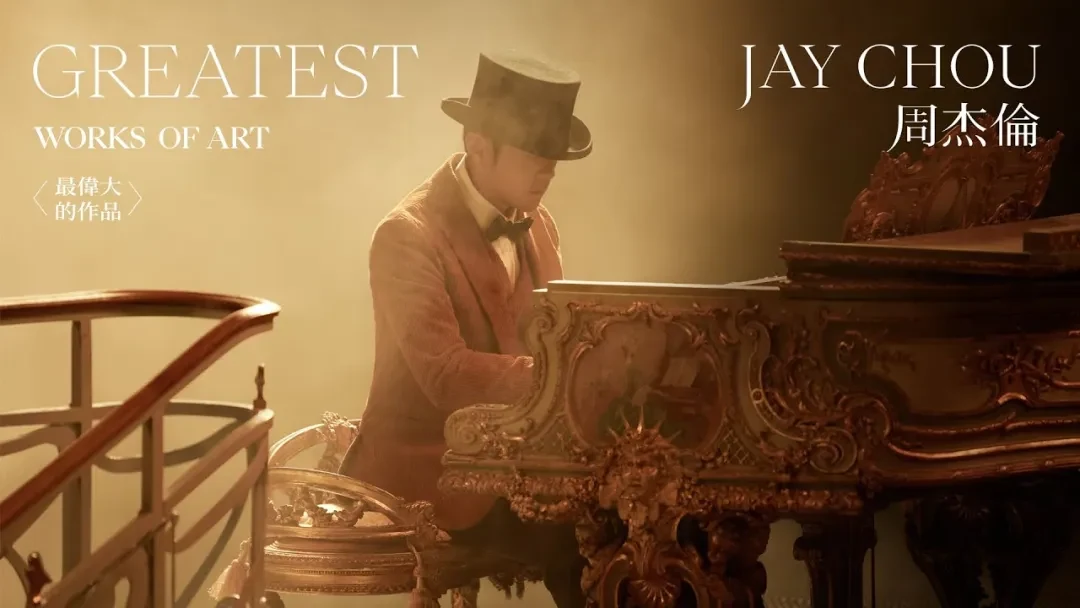
In Greatest Works of Art and Children of the Sun, Jay Chou puts himself in the same frame as Van Gogh, Magritte, and Sanyu in the MVs. The suggestion that he can be mentioned in the same breath as these masters is all but spelled out, as if he truly believed his work could become one of the "greatest works of art" like a Picasso painting. But this is exactly where my question lies: does he really believe it so firmly? Is it possible that he is just playing this role, and enjoying it? In "Children of the Sun," for instance, he also puts himself (in a suit) into Rembrandt's The Anatomy Lesson of Dr. Nicolaes Tulp. He has always loved luxury cars, too, and he has a song like "Hip-Hop Flight Attendant" that can fairly be called vulgar, and he shows off all sorts of lifestyle content on Instagram. Lately he has become obsessed with art collecting. With this in mind, could appearing in the same frame as the masters in his MVs, and frequently quoting artworks in his own work, still be the same playful spirit that has always been in him, rather than a serious self-positioning?
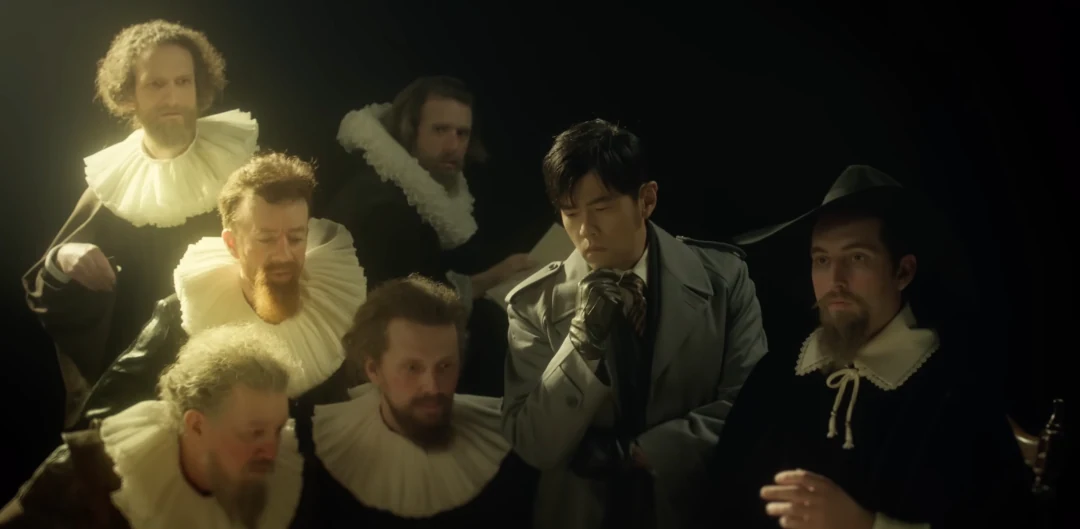
The problem lies precisely in bringing in works of art. He may still treat artworks the way he treats luxury cars and magic tricks, finding them "badass" too, and so he posts photos of himself with Picasso's works and has himself join the crowd looking on at the Death of Marat in his MV. But the problem is that luxury cars and magic can exist almost as pure claims of meaning (I just think it looks good, it's fun, it makes me happy). Appearing in the same frame as the masters, whatever his subjective intention, inevitably amounts to a statement about economic and cultural rank. That is because art history (especially Western art history) is itself a system full of canonization and the value judgments that come with it. This is even more true in the world of art collecting. The way a person enters this system determines his position within it. Jay Chou displaying his art collection and Rosalind Krauss displaying hers carry entirely different meanings. The way he enters into artworks may be unselfconscious, and that very way shows that his relationship to the field of art is in some sense external.
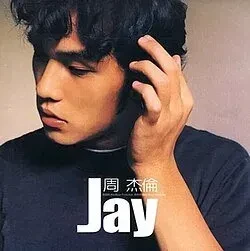
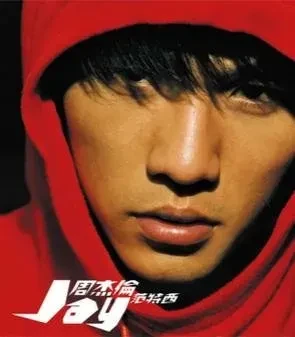
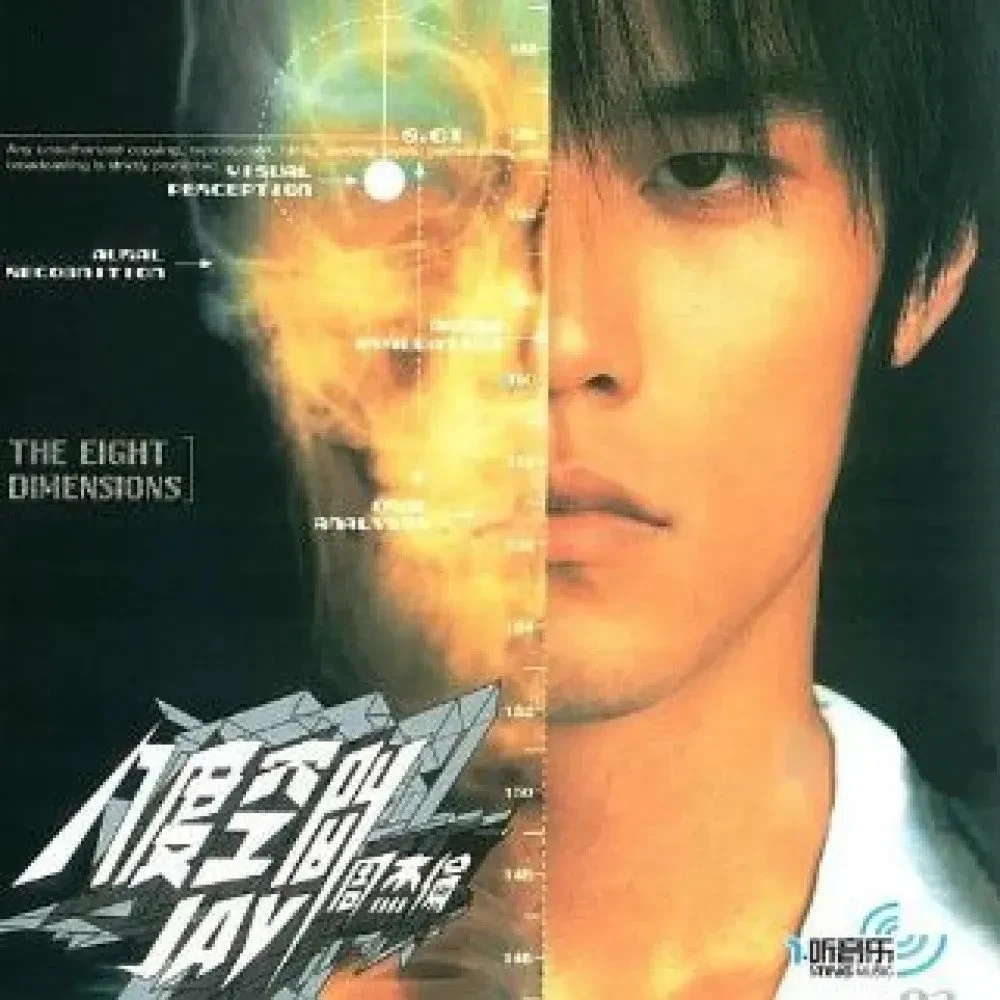
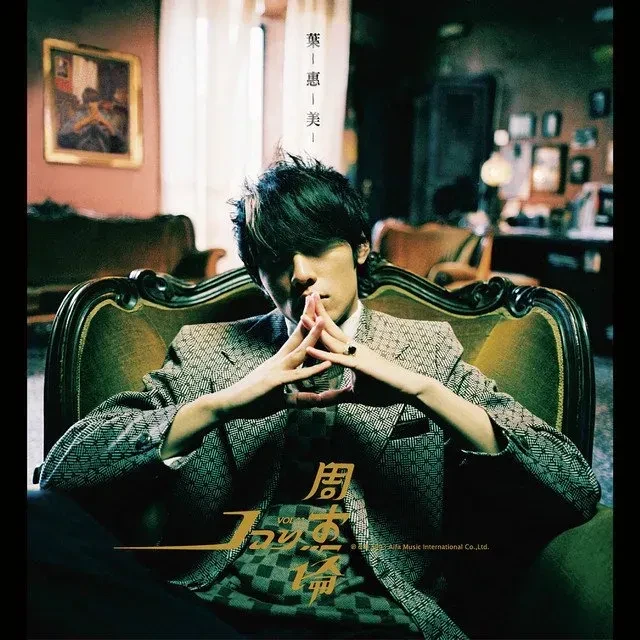
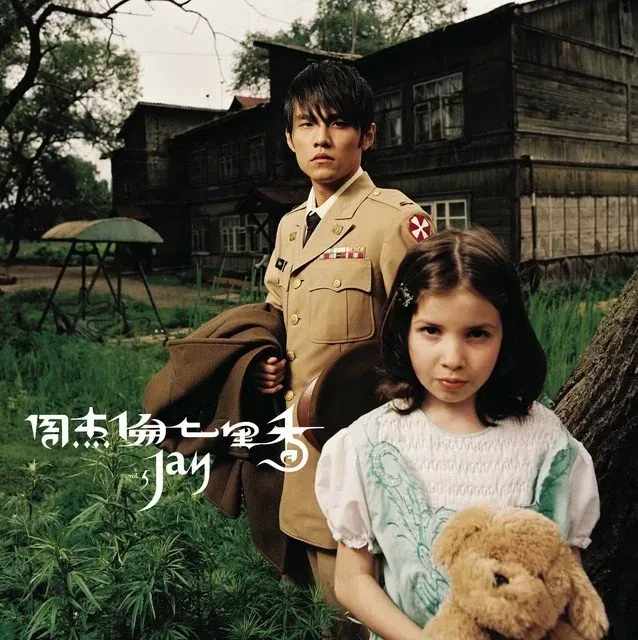
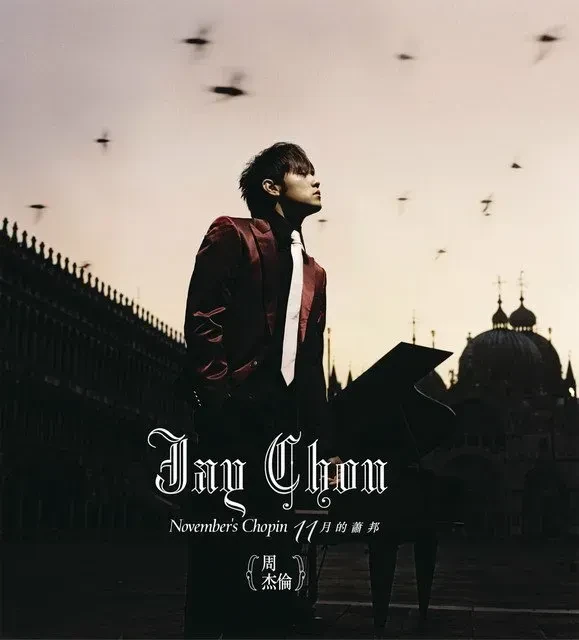
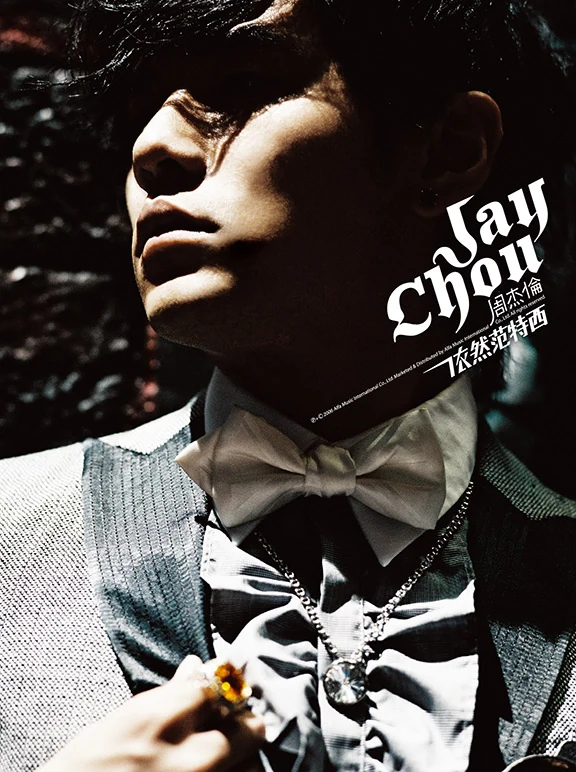
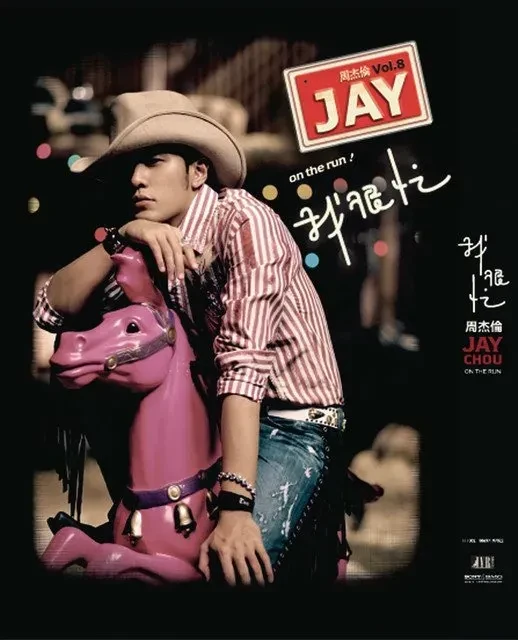
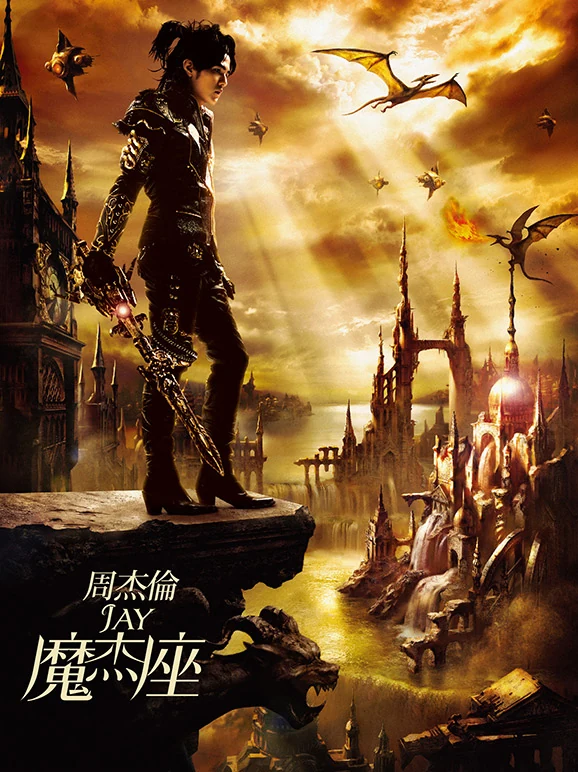
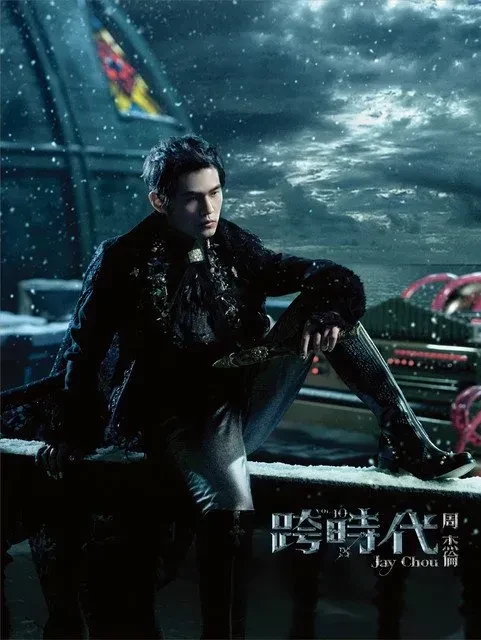
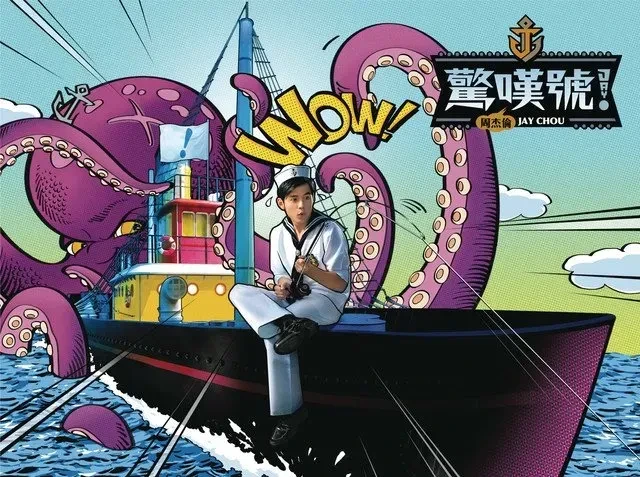
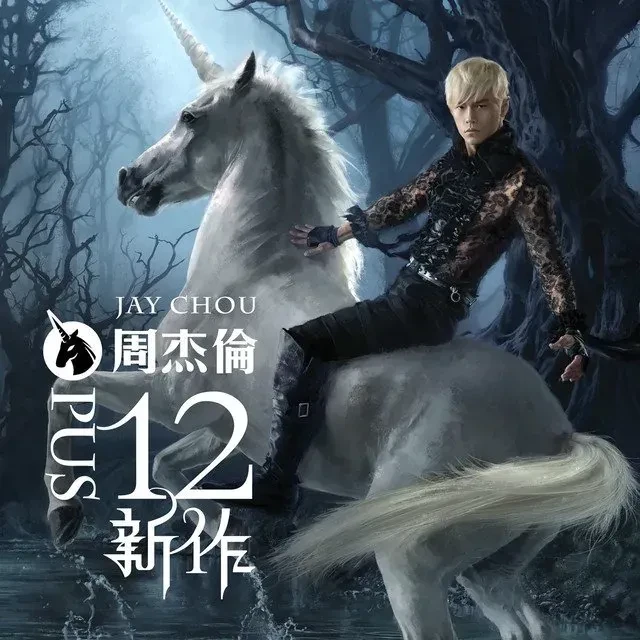
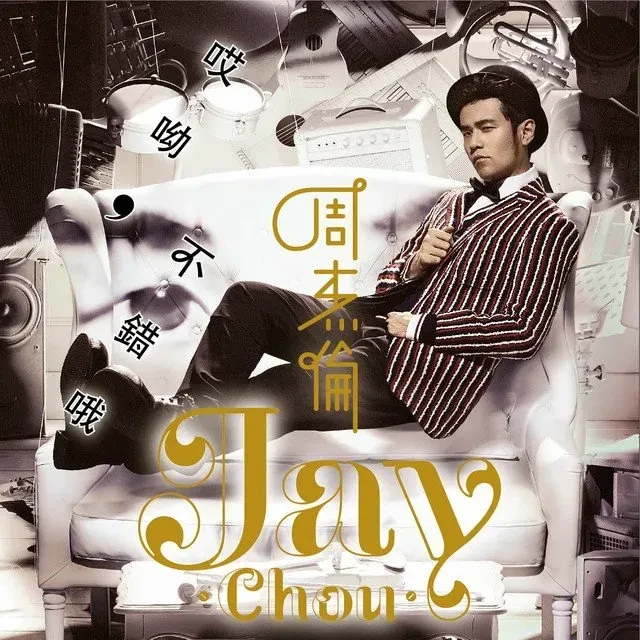
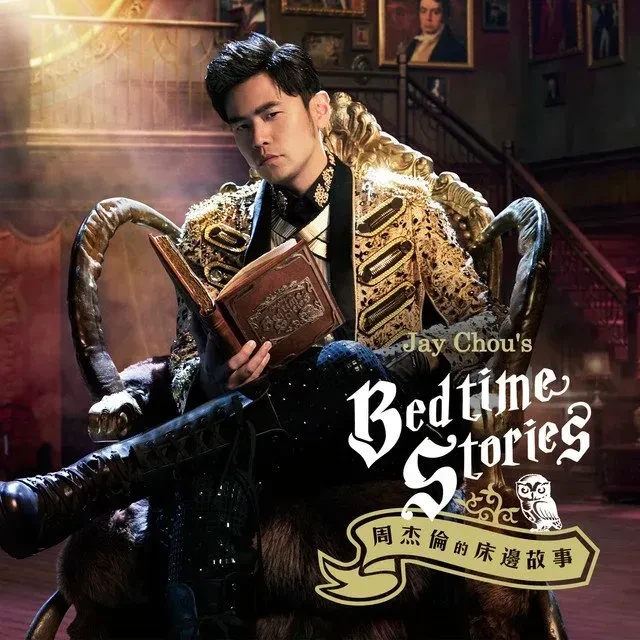
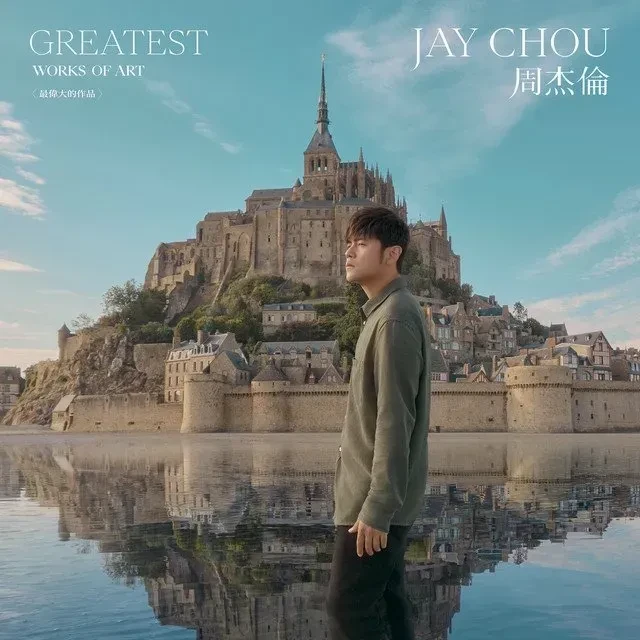
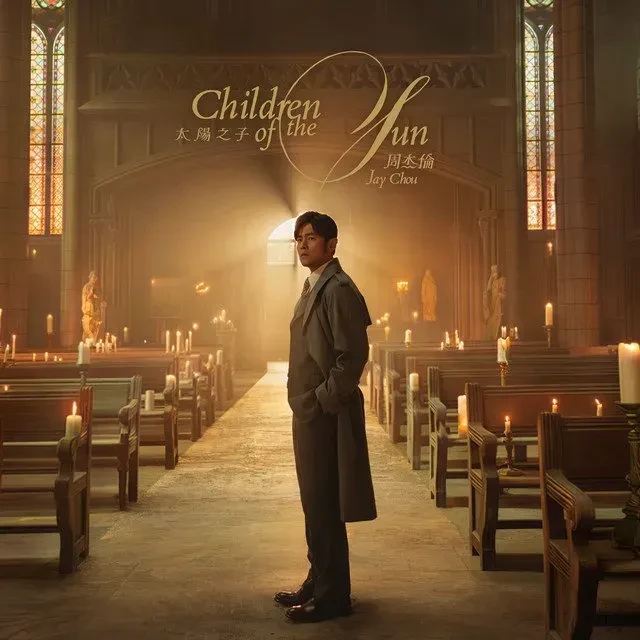
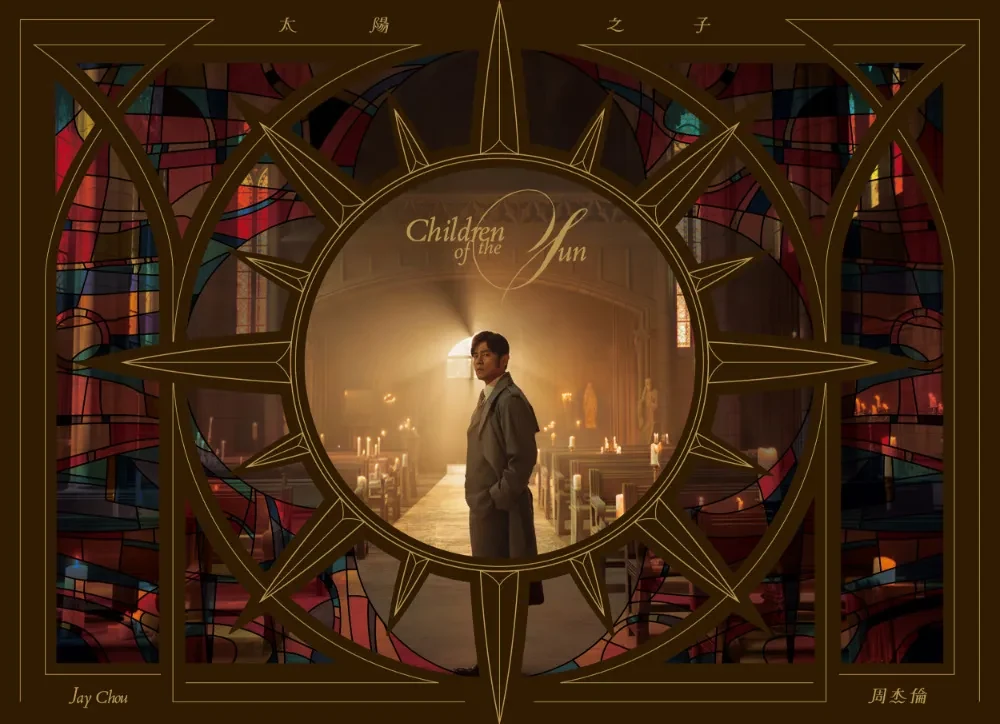
You can go through all of Jay Chou's album covers, from Jay to Children of the Sun, and get a glimpse of this problem. Without question, every one of these covers has his own figure as its main subject. But I think there is an absolute break between Greatest Works of Art and Children of the Sun and the covers of the fourteen albums before them. The compositions of these two covers are strikingly similar: a man standing alone before a grand architectural landscape. He stands there so settled and at ease, as if he had returned to a place that was always meant to be his. Everyone knows how shy the early Jay Chou was, and you can see it in the covers: on Jay, half of his face in profile is covered in shadow; on Fantasy he wears a hood; on The Eight Dimensions only half his face is shown. The visual presentation of the early covers has a strong inwardness. Precisely because he was not deliberately managing his image, that image kept a sense of inexhaustibility that came from its inwardness. In other words, this quality is shyness. Shyness can be called a noble quality, because it means a person has realized that his existence is not self-sufficient or something to be taken for granted. "Shyness" is a conscious awareness of the fact that one is becoming an object being looked at. The premise of this awareness is Levinasian: acknowledging that the gaze of the other exists, and, more importantly, that this gaze cannot be controlled by me. The middle-period covers are very interesting. If the self-image on the early covers was mainly this inward shyness, then in the middle period he kept trying to make himself "become someone else." Either way, there was an absolute distance between him and what he was doing. For example, the cowboy on On the Run, the dragon-battle knight on Capricorn, the vampire on The Era, the sailor on Exclamation Point, the knight on Opus 12, the Chaplinesque actor on Aiyo, Not Bad, the vintage, ornate storyteller on Bedtime Stories ("the storyteller" is a very meaningful motif: even when telling stories to his own daughter, it implies at least some minimal passing-down and handing-over, an intention to make oneself a medium. A storyteller should direct people's attention to the story rather than to himself, making himself a channel so as to pass on something that does not entirely belong to him). The recent covers, by contrast, plainly show a thoroughgoing "realness."
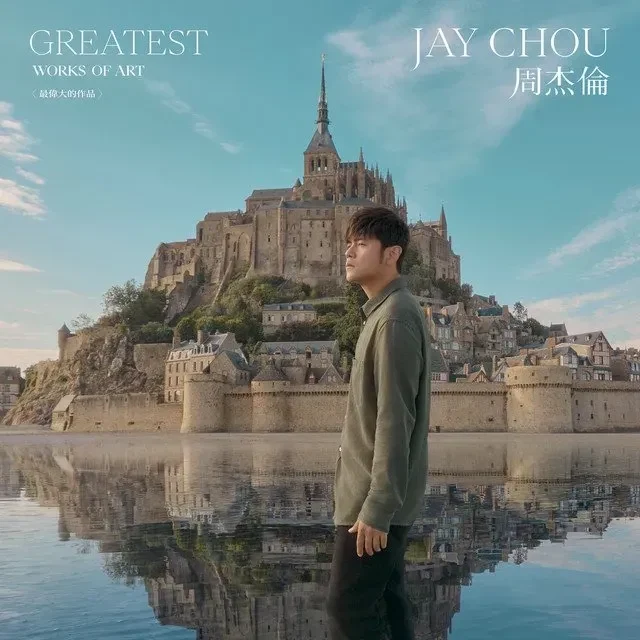
First of all, the background of Greatest Works of Art, as a space, is highly recognizable as real: this "is" Mont-Saint-Michel, in the world we live in. And the man standing in front on the cover undoubtedly "is" Jay Chou himself. You could also say that the figures on the earlier covers "are" Jay Chou himself, but the Jay Chou on the cover of Greatest Works of Art serves no aesthetic atmosphere outside his intention to display himself. What we see on Jay is closer to a state of shyness. As for Greatest Works of Art, a designer has pointed out before that the color of Jay Chou's clothes is almost indistinguishable from the background. I think he meant to blend himself into the scene. Of course, Jay Chou seems to play at "cosplay" these days too; in the "Children of the Sun" MV, for instance, he plays a vampire hunter. But the realness of that "Jay Chou" is still extremely strong. Before, we knew the dragon-battle knight "was not" Jay Chou, and Jay Chou "was not" the dragon-battle knight, and it was precisely this gap that secured the fun of the character and the playfulness of the act of playing it. But Children of the Sun lacks this gap. When he talks with Van Gogh, I feel strongly that the person in the conversation is not any real detective but Jay Chou playing a detective. When a person begins to position himself seriously in this way, the nature of the thing changes. Even granting, for the sake of argument, that Jay Chou just does this because he finds it "fun," the act still becomes stiff because it lacks the playfulness of cosplay: the essence of play is that it "can't be taken seriously," but now he seems to mean it seriously.
In other words, when a creator starts collecting art on a large scale and visually binds himself to these canonical originals, the act itself reveals how he understands art: at least to some extent, "art" means artworks that can be collected and owned, and is intimately tied to things whose value has already been established and on which a price has been put. That is not to say there is anything wrong with collecting art; even Picasso collected art extensively, and Francis Bacon had the same collecting mania. Try looking at what the title track of Greatest Works of Art says. Every artist makes an entrance in it as if being read off a menu. Of course, I am not saying Jay Chou ought to reveal some "profound insight" about art in it; that is not his job, but that is exactly what makes it worth asking about. The way Greatest Works of Art arrives at its claim ("the madness of a generation, the king of music, all things bow to my score") is by reducing these masters' works to the most easily digestible visual symbols, and when it then uses them to prove he deserves to be ranked alongside the masters, one cannot help being suspicious. This self-proclamation lacks the quality of the early days, the mix of unease, anger, aggression, and vulnerability that came from having an opponent (not necessarily a specific person; it could also be a certain situation). But here there is also a fairly real dilemma: it really is hard for one song to be both an art tour accessible to the whole public and a credible claim that its creator is comparable to these masters. Because Jay Chou is still a creator occupying the position of the greatest common denominator (and he and the interested parties around him increasingly need him in that position), while the theme he wants to take on seems to contradict the logic of the greatest common denominator.
I think, though, that at least on those early albums, "art" did not relate to him in this way. The value of a song like "Old Indian Turtledove" does not lie in any single style or single tradition that went into making it, because the song itself is a new object for the ear. Nor did he need to deliberately put himself next to Chopin to prove his music had value (his best works have never been things like "Dream Launch" or "Piano Wound" that deliberately cite famous works). To say something rather arrogant: when a creator approaches artworks in this way, he actually moves further away from art. The institutional side of art and its creative side cannot vouch for each other. What really lets a creator establish his place is not dependence on, or identification with, the existing order, but simply the act of creation itself. Jay Chou, as a real-life celebrity, by putting himself into visual dialogue with works like Ophelia, is in fact making an imaginary claim about his own place in art history. And even if Jay Chou's work really could join those ranks, that joining could never be accomplished through this meta-claim itself. He does try to distort the paintings and alter them imaginatively, but these alterations are harmless and inoffensive, serving mostly a kind of identification, an effort to narrow the gap between himself and the masters as far as possible.
Of course, for all my rambling, my original intention was simple enough: I distrust both the decline theory that says he has used up his gift and the unconditional defense that says every work people trash will become a classic. There is no doubt that something has changed between Jay Chou's early and late work, and whether the change is for better or worse is a matter of opinion. I don't think "he's living too happily" can explain this change (what right do we have to expect a person to be unhappy? Or, to put it another way, why don't we think he simply ought to go on being this happy?); rather, what has changed is the concrete interfaces through which he touches the world, and the way of experiencing the world that grows out of them. Jay Chou now lives far more freely and comfortably than he used to. He can now choose, as he pleases, to repeat his old patterns (as in "The Tender Women of Xiang"), or to talk freely about his own life experience (as in "I Do"); he can choose to try something novel that may not succeed, or choose to pursue art collecting, luxury cars, travel variety shows, and so on. His actual life experience has quite likely grown rather than shrunk compared with when he was young. The density of his life experience itself has quite likely grown rather than shrunk as well. We can also see that the way he gets along with the world has much more room to breathe than when he was young. It is just that this growth in experience does not automatically turn into musical or artistic expression. A creator's identity and experience can never guarantee that in advance. Is it possible for a person to keep living comfortably while actively rebuilding those concrete contacts with the world that have come loose? It is hard to say that Jay Chou has no such intention, but JVR Music and the commercial team around him will themselves get in the way of it, because everyone needs Jay Chou in a safe position. He is indeed more whole than before; it is just that this wholeness and ease may not have been passed on to his listeners in quite the right way.